Family Disaster

In 1854, George Brisbin erected a log camp on the lands of Dr. Daniel Houtz in Clearfield County, Pennsylvania, to log the forests and a sawmill was built which ran until 1869. Brisbin then discovered the best quality semi-bituminous coal and colliers were built. As the mines were being opened, a town was laid out, lots were sold and the resulting town was called North Houtzdale. In 1880, a large mill was built in the Northern part of town. This information and more is in “History of Clearfield County, Pennsylvania: with Illustrations and Biographical Sketches” by Lewis Cass Aldrich which was published in 1887. It’s available as an eBook on Google books.

My 3X great grandparents, John Wilkins and Eliza Jane (Gibson), were on the 1880 federal census for North Houtzdale. John is a mail carrier. The three adult sons living with them- David, Jacob, and Barton are coal miners Also on that census is my 3X great grandparents, John Trimbath and Mary Ann (Trimbath). John is a miner and they have four children living with them- Thomas, Ellen, Emily, and Alice B. Living next to John Wilkins is his son and my 2X great grandparents Hiram and his wife, Elizabeth (Trimbath), and their children Eliza Ann, Thomas, and John Wesley. Hiram is a coal miner. Living nearby is Hiram’s twin brother, Harvey and Harvey’s wife, Mary Jane Trimbath and their children- Laura B, Hiram, Mary J, Sarah Ida, and James W. Harvey is also a coal miner. Yes- Trimbath sisters married Wilkins’ twin brothers.

On January 8, 1883, North Houtzdale became the borough of Brisbin and on June 20, a post office was granted and John E. Vaughn became the first postmaster.

On May 2, 1884 after the birth of three more children, I had at least 26 family members living in Brisbin when disaster struck- Fire.

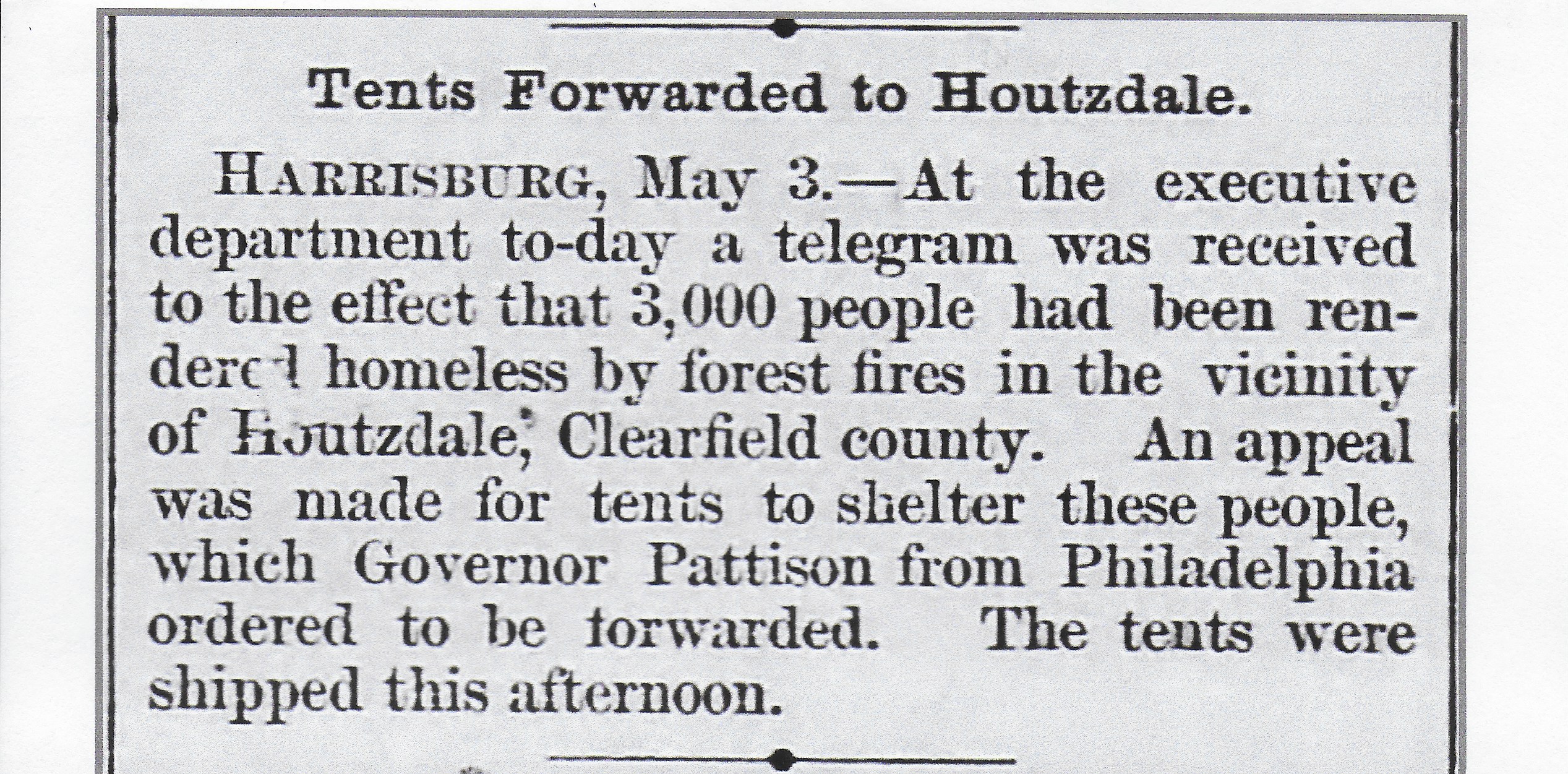
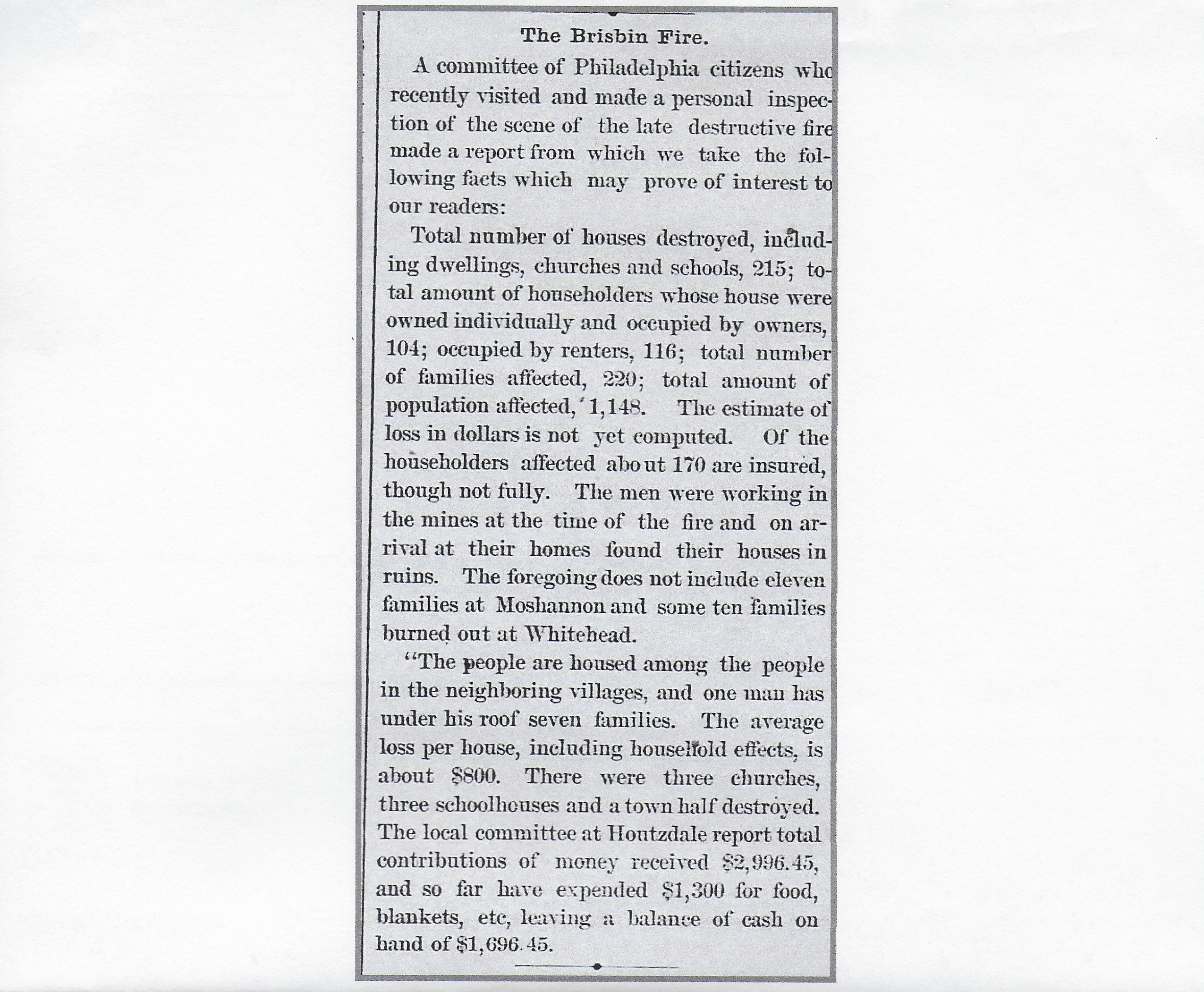
One of the best articles about the fire was in the Raftmens Journal, Clearfield, Pa., on Wednesday, May 7, 1884. I have a copy of the article from microfilm and it’s very difficult to read. I couldn’t find the article on the internet to get a clear copy so, with a bit of editing, I’m typing out the article. BRISBIN BURNED Almost the Entire Town Swept Away by the Flames 500 Buildings Destroyed- Hundreds of Families Homeless A Generous Public Called Upon for Food, Clothing, and Lumber Twice in the history of Clearfield County has she lost an entire town by fire and both times the southwestern corner of the county has been the sufferer. On Thursday, May 20, 1875, fires were burning in the woods surrounding the town of Osceola, started as usual in some unknown way….Phoenix-like it arose from the ashes, and one unacquainted with the facts would not suppose that such a fate had so recently befallen the now flourishing town of Osceola. On Friday morning last the people of Brisbin, but eight miles from Osceola, were warned that fires had been started in the woods and that they were being swept toward the town by high wind which was then blowing, but before they could fully realize their danger the work of destruction had begun, and before night-fall it was complete. With the exception of a few buildings scattered over the hills on the outskirts of the village, it is a blackened ruin. Five hundred or more buildings have been burned and between two and three thousand people are homeless and in want. The greater number are being sheltered by the people of Houtzdale, which is separated from Brisbin by a high hill, the distance between the two towns being about one mile. So promptly was the aid extended that provisions from this and other places furnished breakfast for the sufferers on Saturday morning. For weeks they will necessarily be dependent upon the public for food and raiment, and they are also in immediate want of money, lumber, etc., in order that they may build temporary houses. The Keystone state will not let them suffer unnecessarily. From our Man on the Ground Houtzdale, Pa., May 2, 1884 It is utterly impossible to give a correct idea of the state of affairs in what was but a few hours since the bustling, thriving town of Brisbin. The fire fiend has done his work well, and hundreds are tonight homeless and penniless who were this morning in possession of comfortable homes, happy families and abundance of the world’s goods to meet all present wants. All is now misery, desolation, want, and in many cases, despair. Many families who became separated during the excitement are still vainly searching for each other, and the search will probably have to be kept up for several days yet before all are finally united. The fire which was the immediate cause of the destruction of our sister borough, originated at a point about 1 1/2 miles west of Brisbin, where a number of Hungarians had purchased a patch of ground, and, disregarding all warnings, started fires in the brush for the purpose of clearing it off. The woods being dry as tinder, with a perfect gale blowing in the direction of the fated town, it was but a short time until the citizens became alarmed, and shortly after 12 o’clock the whistles of Hoover, Hughes, & Co’s mills sounded the alarm, which was promptly responded to. Every business house and bar-room in Houtzdale was promptly closed, and all hurried over the hill to render what assistance was possible. The main object was to save the mills, for if they caught fire all hope was gone, and hence a desperate battle was fought. But man’s strength availed little against which they manfully but hopelessly strove. Never have I seen a man work harder nor display more heroism than did Mr. T. C. Cryan, engineer of the mill, in his efforts to save the property of his employers. He will have the marks of the fray for some time to come, having been badly scorched about the face and hands. Once the flames gained a foothold in the mills, all hope of saving the town was abandoned, and all energies were devoted to carrying out and burying, or otherwise disposing of whatever could be seized in a hurry. Teams flocked in, and every one worked with a will, but comparatively little was saved, owing to the brief time which elapsed before the flames were sweeping everything before them. Four hours after the alarm was sounded, it was possible to walk through the ruins without serious inconvenience from smoke or fire…. So far as is positively known as of this writing (Friday night), but one life has been lost, the victim being an aged lady named Donovan, who perished in the flames, and was with great difficulty identified. Some of those yet missing may have perished, as there are numbers of whom no trace can be found. A great many persons are utterly prostrated by the fatigue and excitement of the day, some of whom can scarcely be expected to recover. There is little doubt that the greater portion of the town will be rebuilt as rapidly as possible. Geo. Rhodes, of the Seven Stars hotel, had his order for lumber and building materials placed before the ruins of his former establishment were half consumed. L. & J. Simendinger have also placed their orders, and before this goes to press, the work of rebuilding will have commenced. Many others will do likewise during the next few days, and within a week the music of hammer and saw will reverberate throughout the now desolate valley. Many of those who own lots are anxious to build shanties which will serve as temporary abodes until more suitable dwellings can be erected, but at present they are entirely destitute. In order to afford these unfortunates at least temporary relief, contributions of lumber are asked for, it is hoped that the appeal will be responded to immediately, as the need is urgent. Houtzdale, May 5, 1884 The greater portion of Friday night was spent in the ruins with a friend who had saved a few of his effects and not having had an opportunity to have them removed, was guarding them to keep off possible marauders, a needless precaution, as from 10 p.m., until after daybreak, not a soul was to be seen or heard, with the exception of those who, like ourselves were on guard. Throughout the entire day, and in fact, ever since, the best of order has prevailed, and it is a matter of general remark that no disturbance of any kind has taken place, with the exception of one or two minor misdemeanors which are not of sufficient interest to go on record. Provisions have been liberally supplied. But bedclothes and bedding are needed in large quantities, it being absolutely impossible to obtain sufficient here to make the sufferers comfortable at night. Money is also needed to purchase lumber for shanties, to serve as temporary dwellings for our unfortunate neighbors. If any of your readers would rather send lumber than cash, it will be just as thankfully received by the relief committee. A telegram was received on Sunday evening, from the Philadelphia Times, asking what was most needed. It was answered as soon as the committee could be interviewed, and it is probable that by the time this is in print, aid from the Quaker City will be on it’s way. A number of tents from the state arsenal, at Harrisburg, arrived Sunday afternoon, and were erected on Monday. The post office was reopened on Saturday in an old blacksmith shop, which escaped destruction. Several shanties have been built, and others will rapidly follow. The mill will likely be rebuilt, but on a less extensive scale, and some distance further from town. Large numbers of swine perished in the flames, and the odor from their partially consumed bodies is sickening. Some of them have been buried, but quite a number still need attention. One instance that has come under our observation is that of a family whose members are quartered in no less than six different places, and we have no doubt that many others are just as inconveniently situated. Quite a number are still suffering from nervous prostration and the inhalation of smoke, a few of whom are in a dangerous condition. The excitement has to a great extent subsided, and the greater number of the sufferers are evidently inclined to make the best of a bad bargain. There are as a matter of course, a few cranks and soreheads (and they are principally among those who were fully insured) who are busy predicting all kinds of disaster to those who talk of rebuilding, but very little attention is paid to their idiocy, those to whom they are known being aware of the fact that these same parties will say anything in order to hear themselves talk. The situation, though terribly sad, is on the whole, hopeful, and if a generous public will continue their liberal contributions for a time yet, we are of the opinion, that the greater number will be in a position to help themselves.

The news of the fire and the request for relief went out even as far as San Francisco.
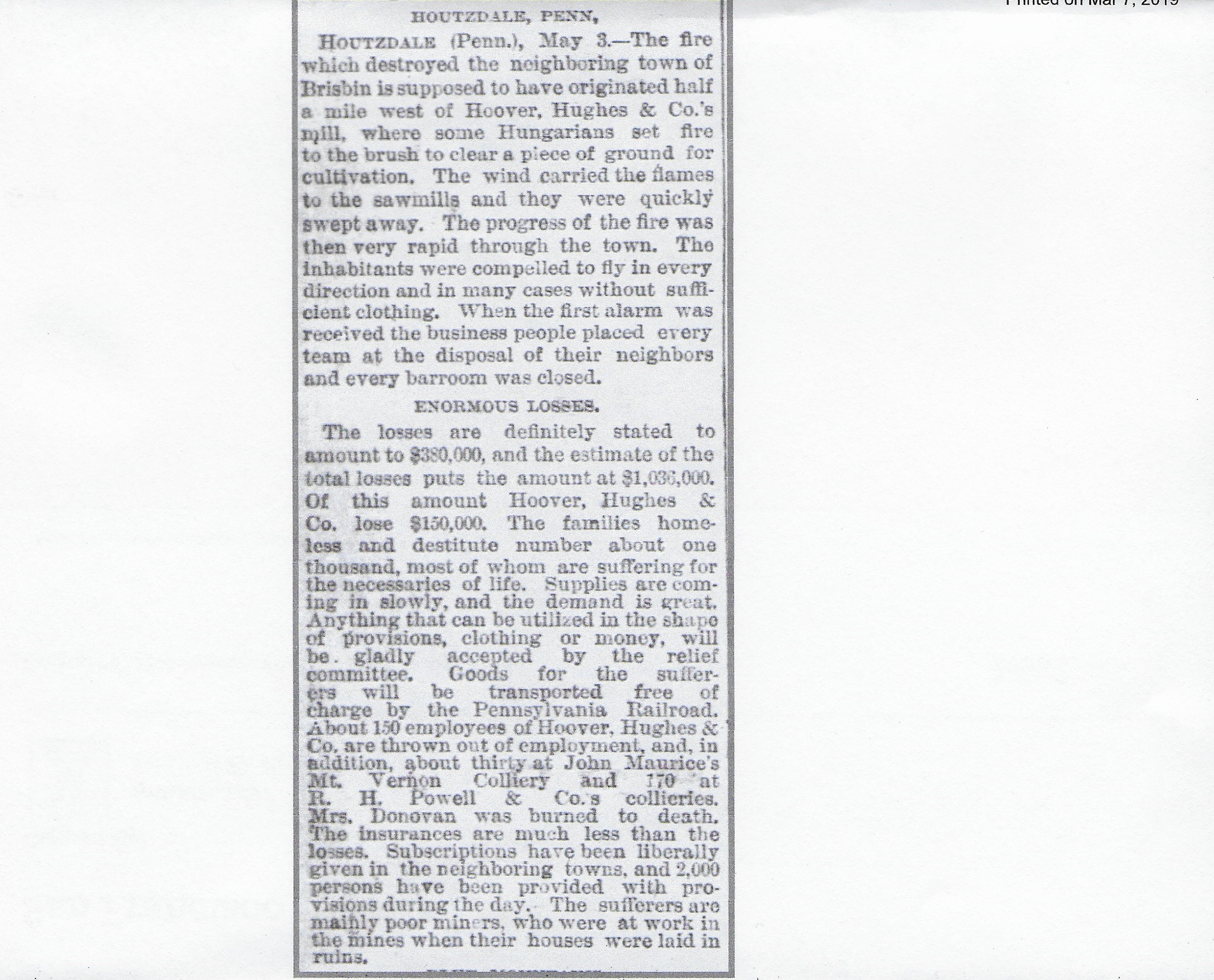
The San Francisco Examiner 4 May 1884, Sunday page 8

The Times (Philadelphia) 5 May, 1884, Mon. page 1

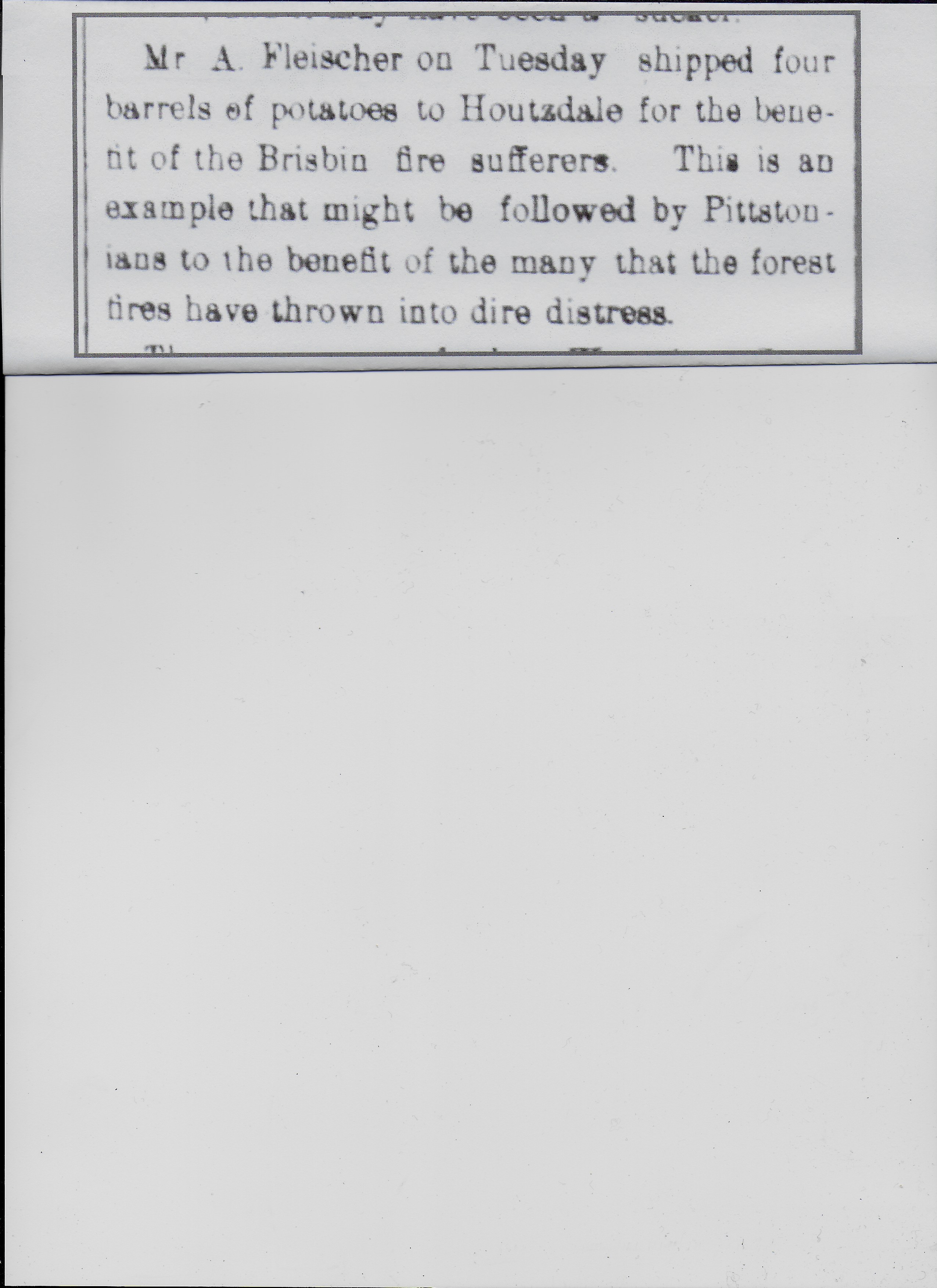
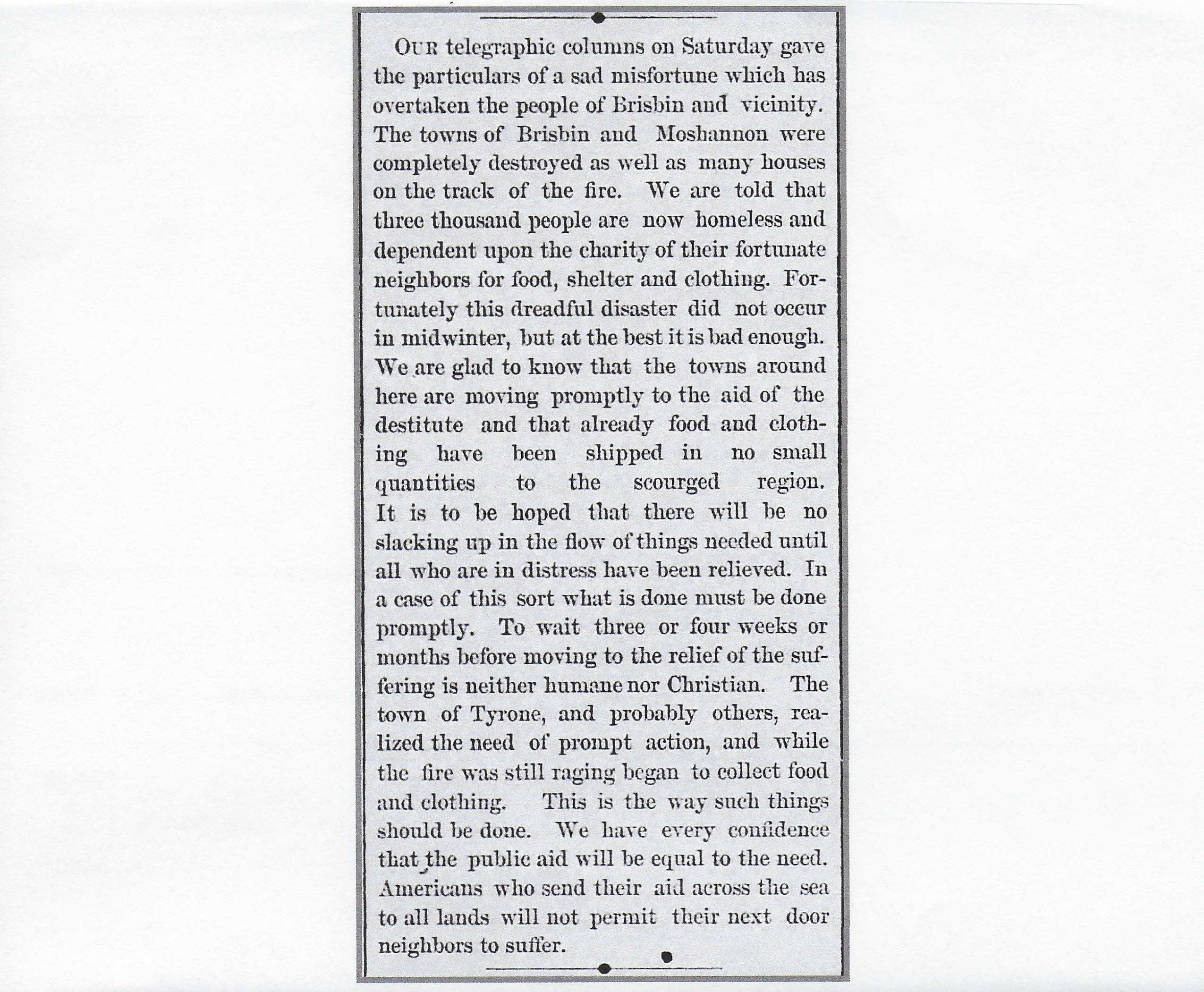
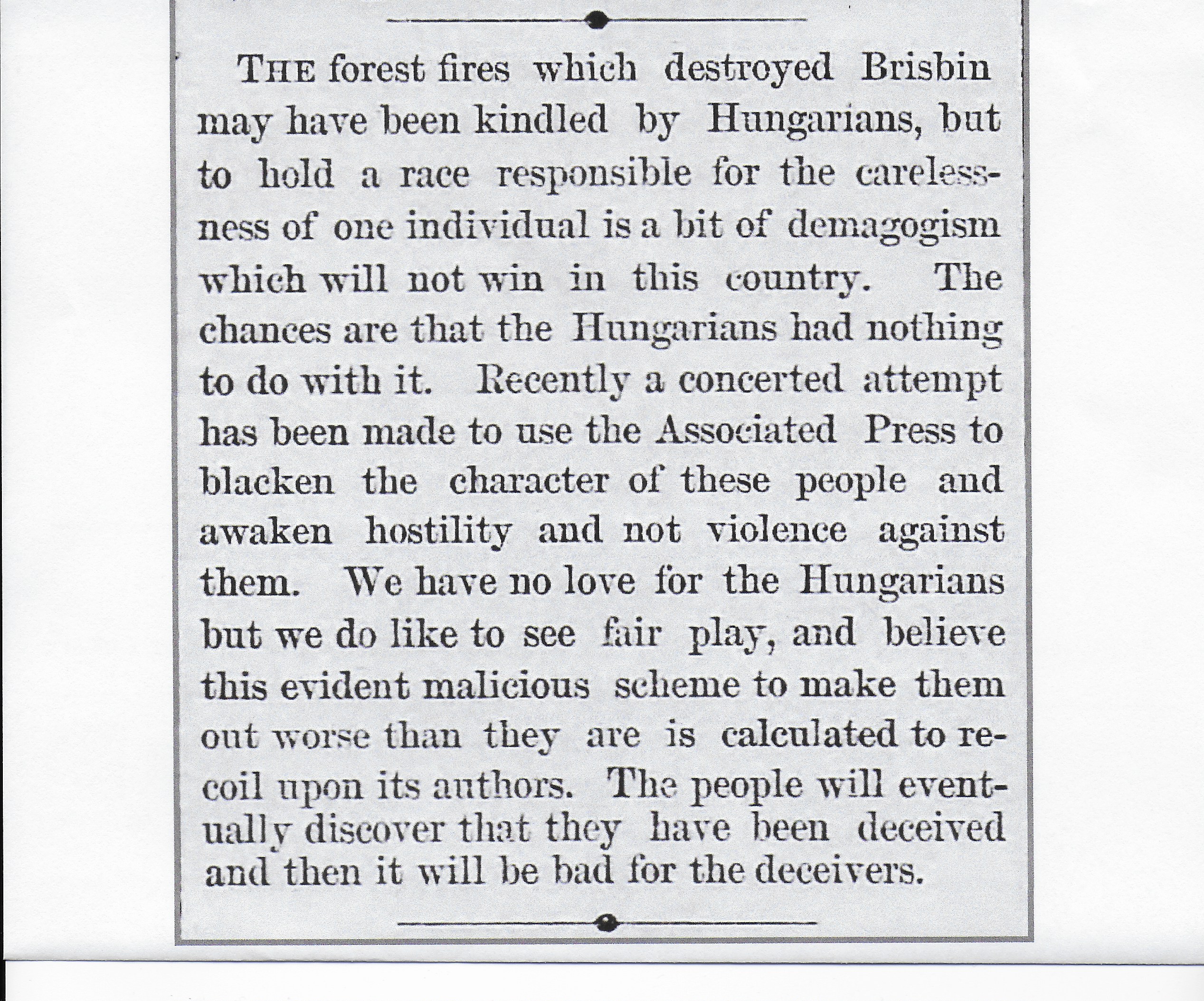
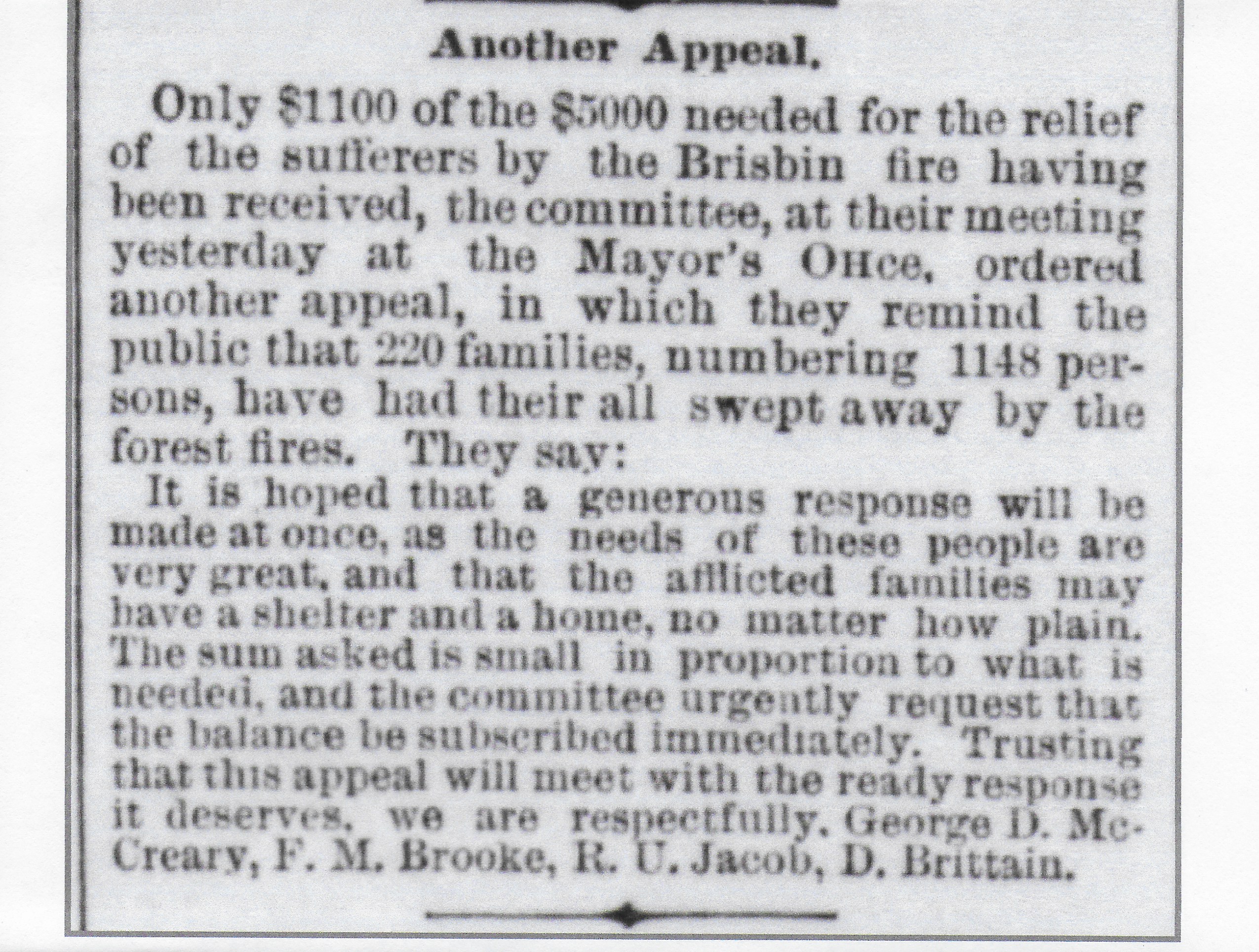
And relief began to pour in:

The Altoona Tribune 8 May 1884, Thu page 1
Evening Gazette (Pittston, Luzerne County, Pa.) 8 May 1884 Thu page 4
The Altoona Tribune 8 May 1884, the page 2 downloaded from newspapers.com
The Altoona Tribune 8 May 1884, Thu page 2 downloaded from newspapers.com
The Altoona Tribune 16 May 1884, Thu page 2 downloaded from newspapers.com
The Philadelphia Inquirer 27 May 1884 Tuesday, page 3 downloaded from newspapers.com

There is always someone who can profit from a disaster:
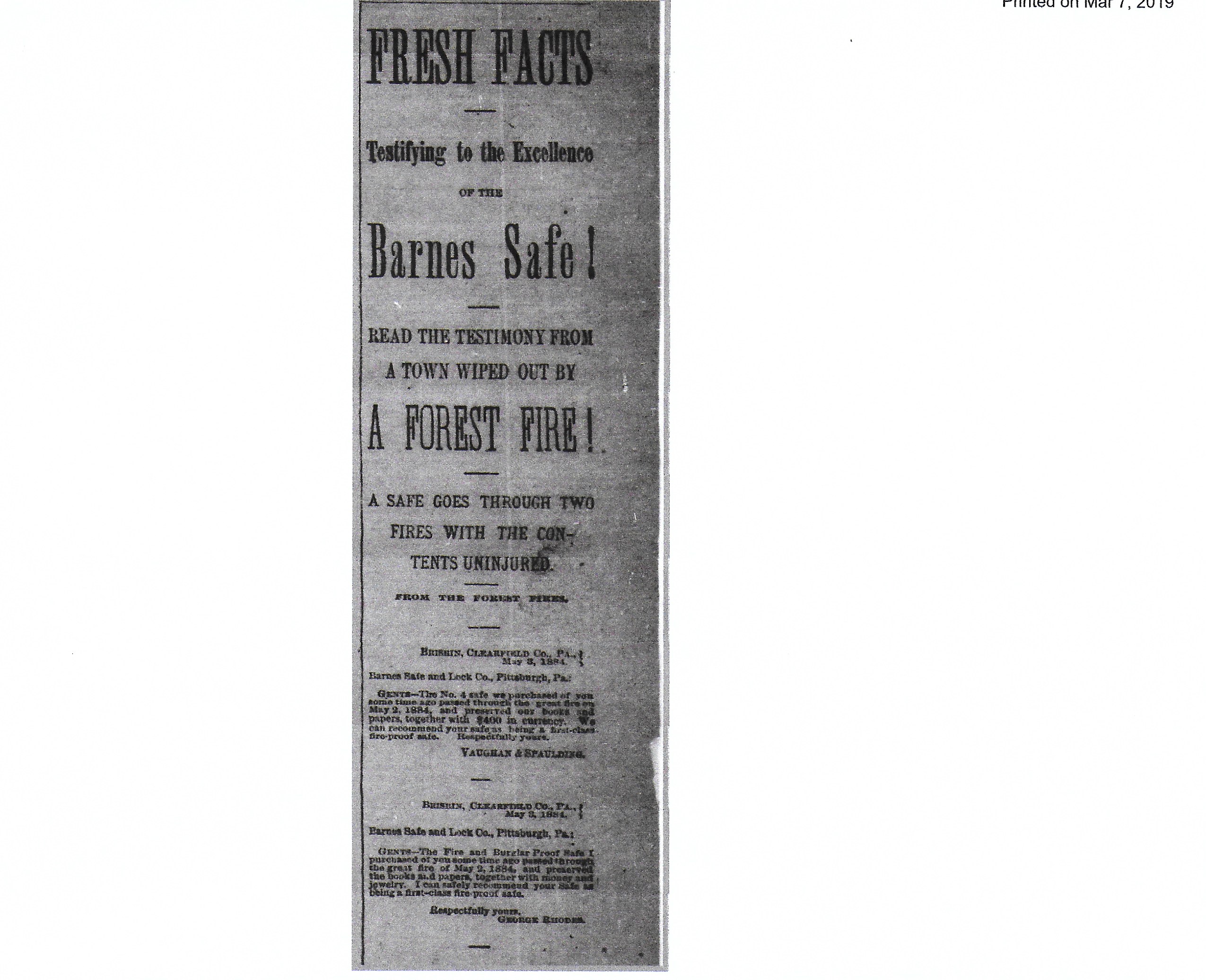
ad in the Pittsburgh Post Gazette 13 May 1884 Tue page 3 downloaded from newspapers.com

The Raftmens Journal, Clearfield, Pa. Wednesday, May 14, 1884 Houtzdale After the Fire- other News and Gossip The Opera House will be rebuilt. Sight-seers still frequent the streets of Brisbin. The new freight office is about ready for business. Burket Bro’s are pushing work on their new bakery. Relief is still coming in, and more is still needed. Lumber piles are visible in all directions in Brisbin. Portions of the sidewalks remain uninjured, here and there. Services are now held regularly in the new P.E. chapel. It is now quite evident that the burnt district will be rebuilt. Most of the societies have secured meeting places in Houtzdale. R.S. Isaberg is ready to commence rebuilding his hardware store. J.M. Lehman, Esq., dispenses law from the cavernous recesses of two army tents. The principal drawback just now in Brisbin is the difficulty in procuring lumber. Shell Bro’s dances at their platform have become one of the institutions of the town. The provisions received at this place by the relief committee deserve special mention for their superior excellence. Moore & VanDusen had their first load of lumber on the ground, to rebuild their ice house, before 6 p.m., in the day of the fire. It may sound somewhat egotistical on our part to record it, but it is generally conceded that the Journal’s account of the fire was the most complete and reliable which reached here. Judging from the preparations made for rebuilding, Brisbinites have lost none of their old-time energy. On the contrary, it appears to have been increased by their misfortunes. Nothing like grit, gentlemen. It will win every time. A stroll through the ruins of Brisbin Sunday revealed the fact that at that time about 25 temporary abodes had been erected or were in course of erection, and the indications are that their number will be almost, if not altogether trebled by the time this is in print. Now that Brisbin’s one-story school houses have gone up in smoke, it is hoped that the directors will erect a good, substantial and commodious building sufficient to accommodate all the schools in the borough under one roof. It will be more satisfactory in every way, besides being much cheaper than the plan which has hitherto been pursued, of building one room school houses and placing them in all parts of town. Postmaster Vaughn sits contentedly in an old wagon makers shop, surrounded by portions of wagons, buggies, sleds, sleighs, cooking utensils, old boots and other litter, with his letter boxes supported at one end by a workbench, and the other end resting od a dilapidated table, considerably the worse of fire. His stock in trade consists of seven lead pencils, nineteen sheets of paper, and a portion of a box of cigars. An internal revenue license adorns the wall in the rear of his establishment.

Houtzdale Observer newspaper January 8, 1885 Brisbin today is ahead of the Brisbin which on the evening of the third of May had been reduced to ashes with better buildings, with new energies called forth by disaster. Her citizens are more self-reliant and stronger. And while the fire was a terrible loss in may ways, it showed forth the highest and best attributes of the citizens of both boroughs.

Though I had known for years that I had relatives in Brisbin when it burned down, it wasn’t until I was putting the pieces together to write this blog that I realized how horrifying it must have been. My great grandmother Eliza was 8 years old. Her mother had to get 4 children under the age of 8 out of town. Her sister, Mary Jane had 7 children under the age of 13 to flee with. Their mother Mary Ann was 58 and their mother-in-law was 65. Most of the men were in the mines. I don’t know if they were able to leave and help or had to stay in the mines until the fire was over.

John and Eliza Jane Wilkins remained in Brisbin after the fire. John died on August 30, 1886 and Eliza died on March 4, 1892 in Brisbin and both are buried in the Odd Fellows cemetery in Brisbin.

Even though John And Mary Ann Trimbath bought property in Brisbin in 1882, they moved to Altoona some time after the fire. John died on February 26, 1893 and Mary Ann on April 28, 1903 in Altoona, Blair County and they are buried in the Fairview cemetery there.

Hiram and Elizabeth Wilkins youngest child was born in Brisbin in 1890 but then they moved to Patton in Cambria County. There, my great grandmother, Eliza met, and on March 14, 1894 married Benjamin Franklin Cole Jr.
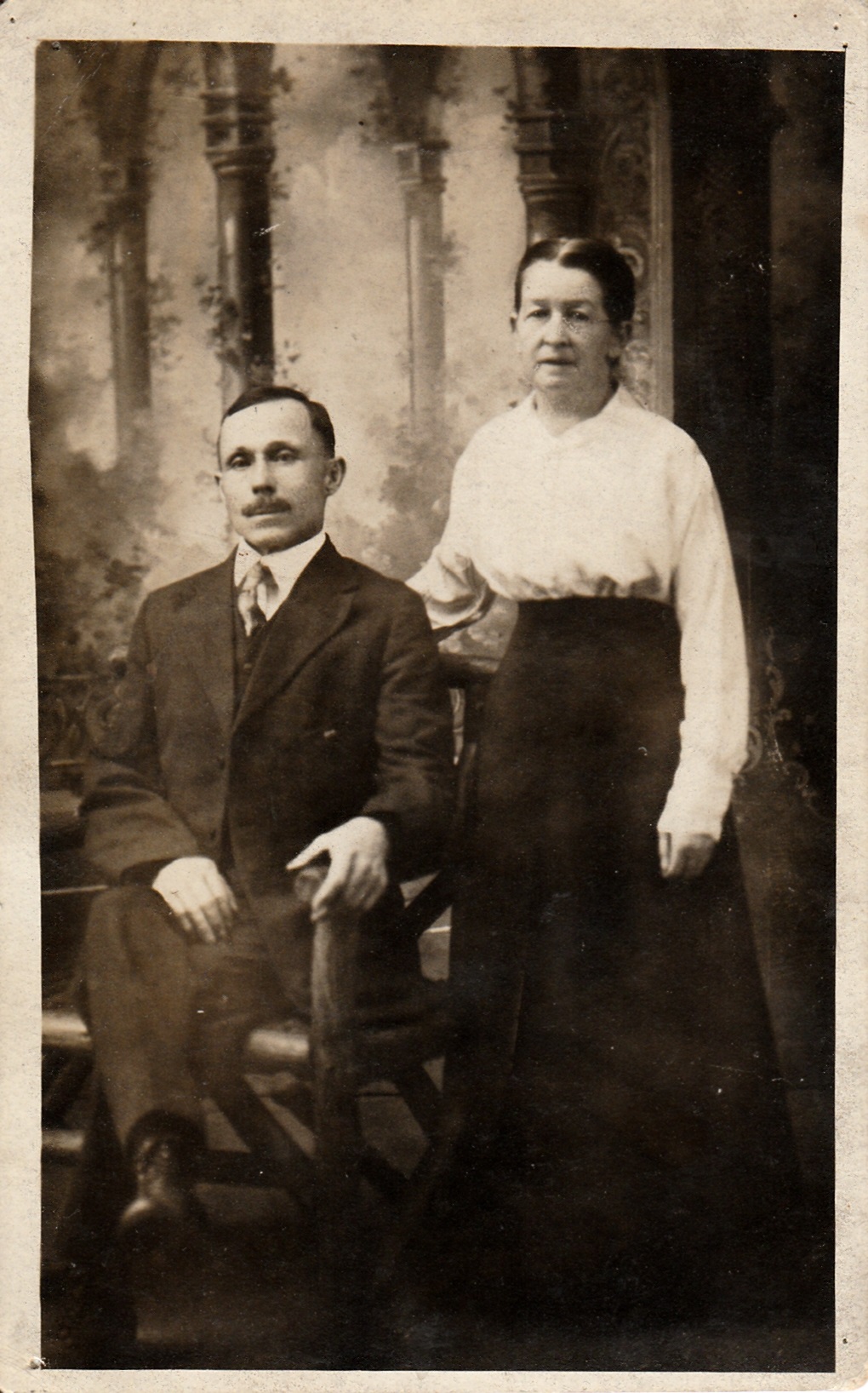
Elmer Cole

It started with Benjamin Franklin Cole and Eliza Ann Wilkins getting married.

Their first son, Elmer Earl Cole was born November 8, 1894 in Patton in Cambria county, Pennsylvania.

While still living in Patton, Elmer’s brothers were born. Burzie Frank was born June 29, 1897 and Hiram Paul was born September 5, 1900.

From an interview with my grandmother (Elmer’s sister), “My dad worked in the mines in Patton. He got to be mine foreman, but it was beginning to run out in Patton, so they moved to Clearfield.

Harriet Irene was born in Clearfield, Clearfield county, Pennsylvania on February 5, 1905.

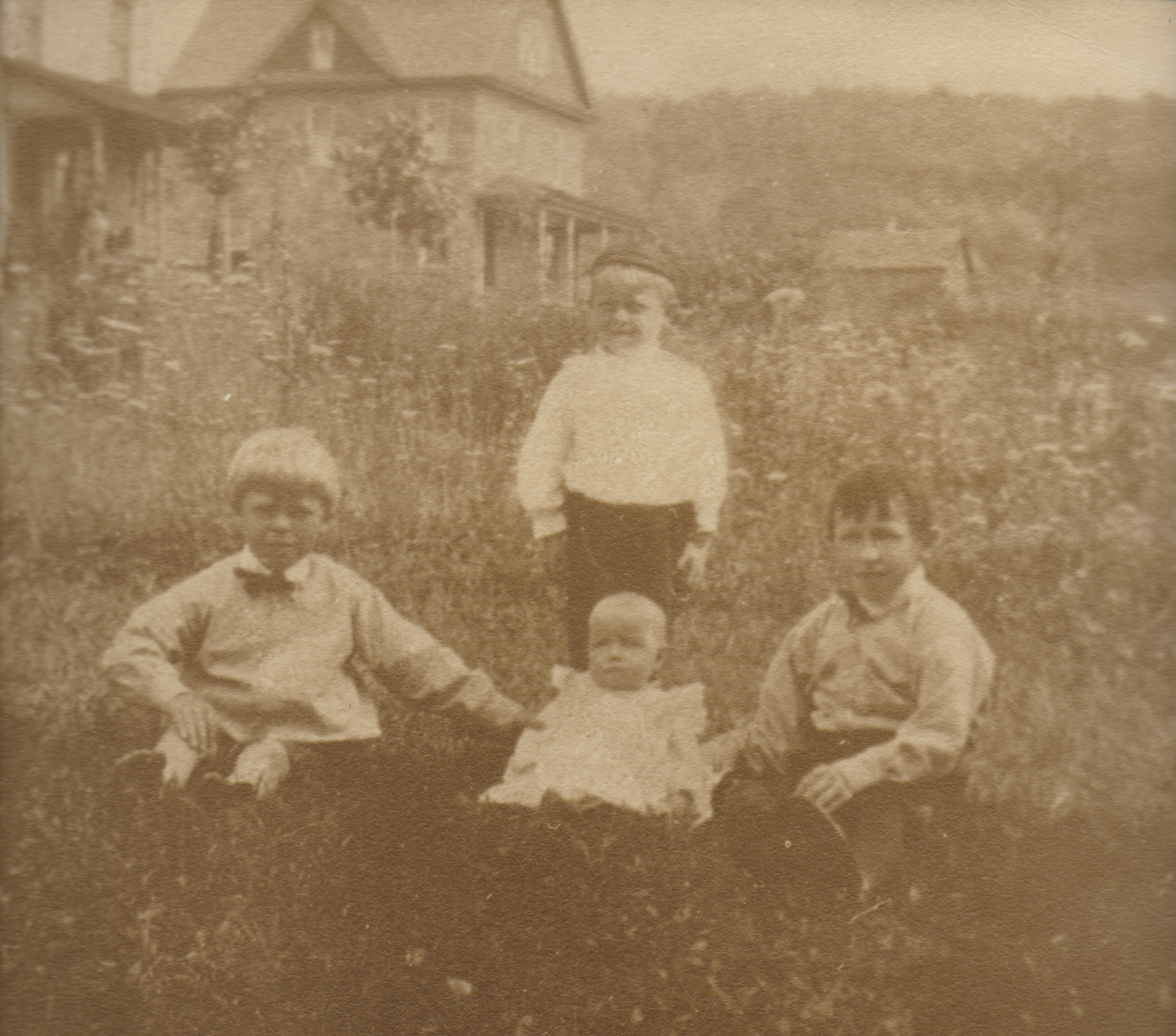
Elmer is standing, Burzie sitting on the left, Hiram on the right and baby Irene in the middle. The picture would have been taken in 1905.
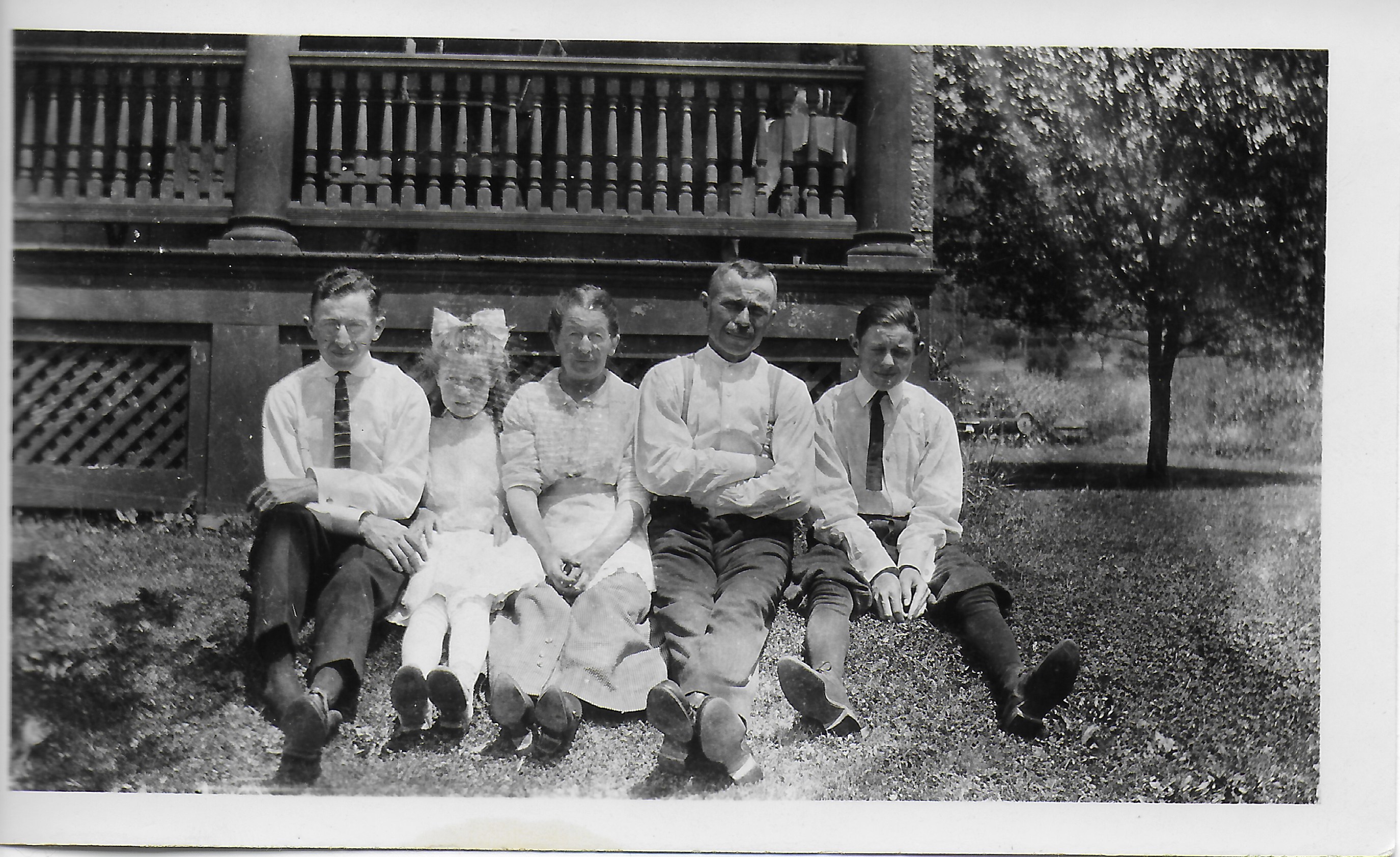
I think this picture was taken by Burzie in 1915 or 1916. Elmer is on the left, then Irene, Mother Eliza, father Frank, and Hiram.
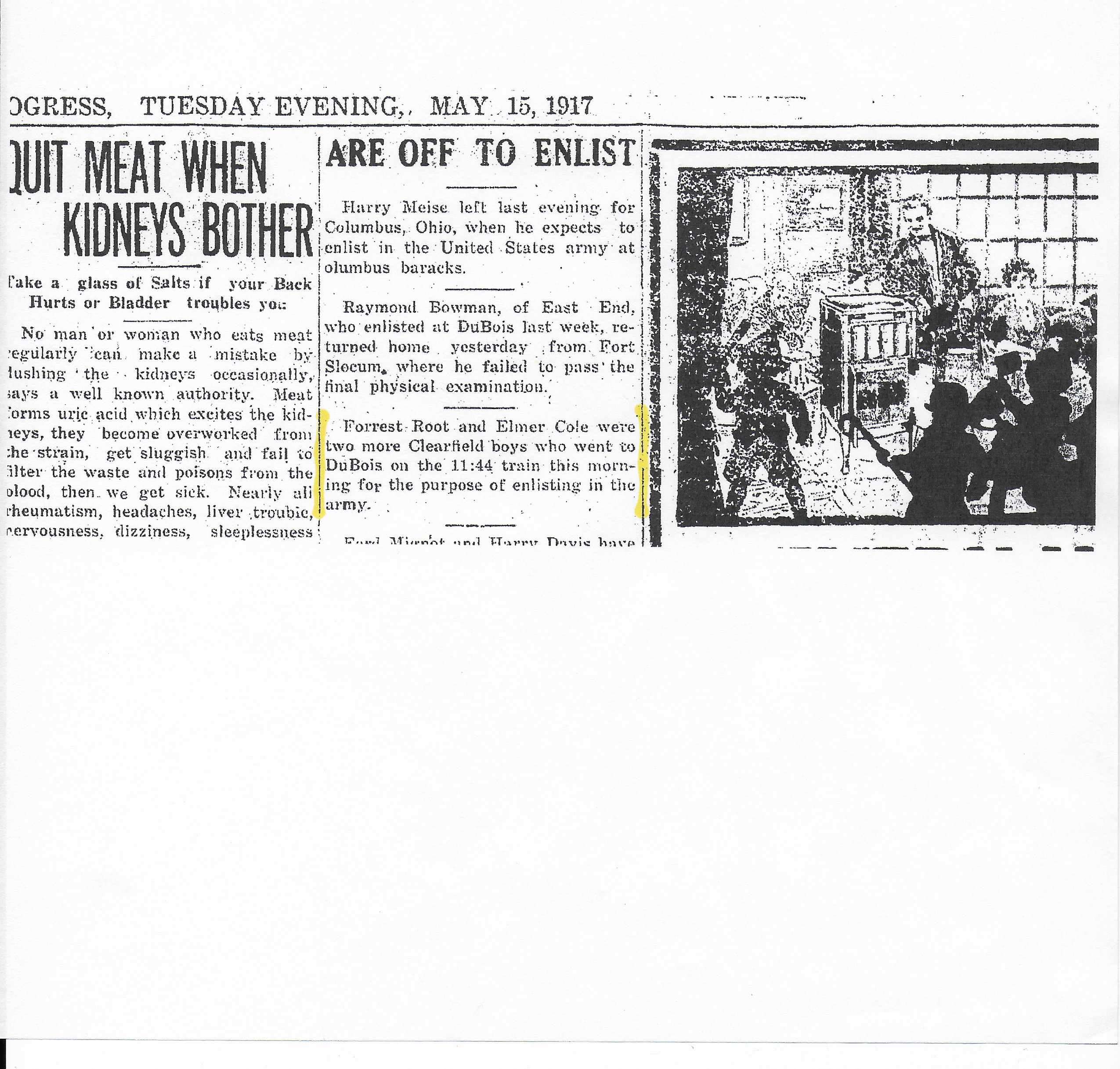
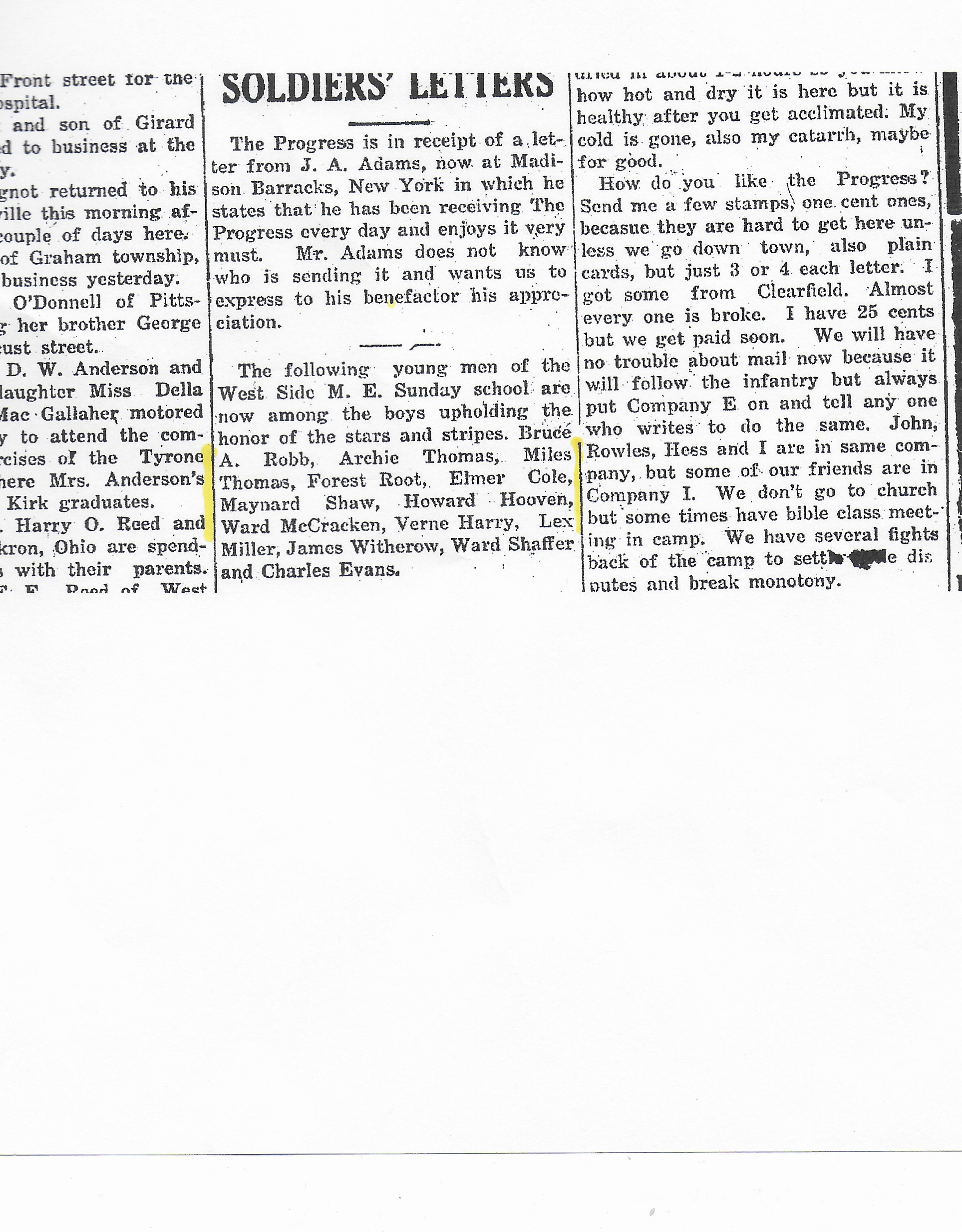
In May of 1917, Elmer enlisted. The announcement was in the Clearfield Progress.
The Clearfield Progress began printing letters written home from soldiers and mentioning the local boys who had enlisted. This article appeared on Tuesday evening, June 12 1917
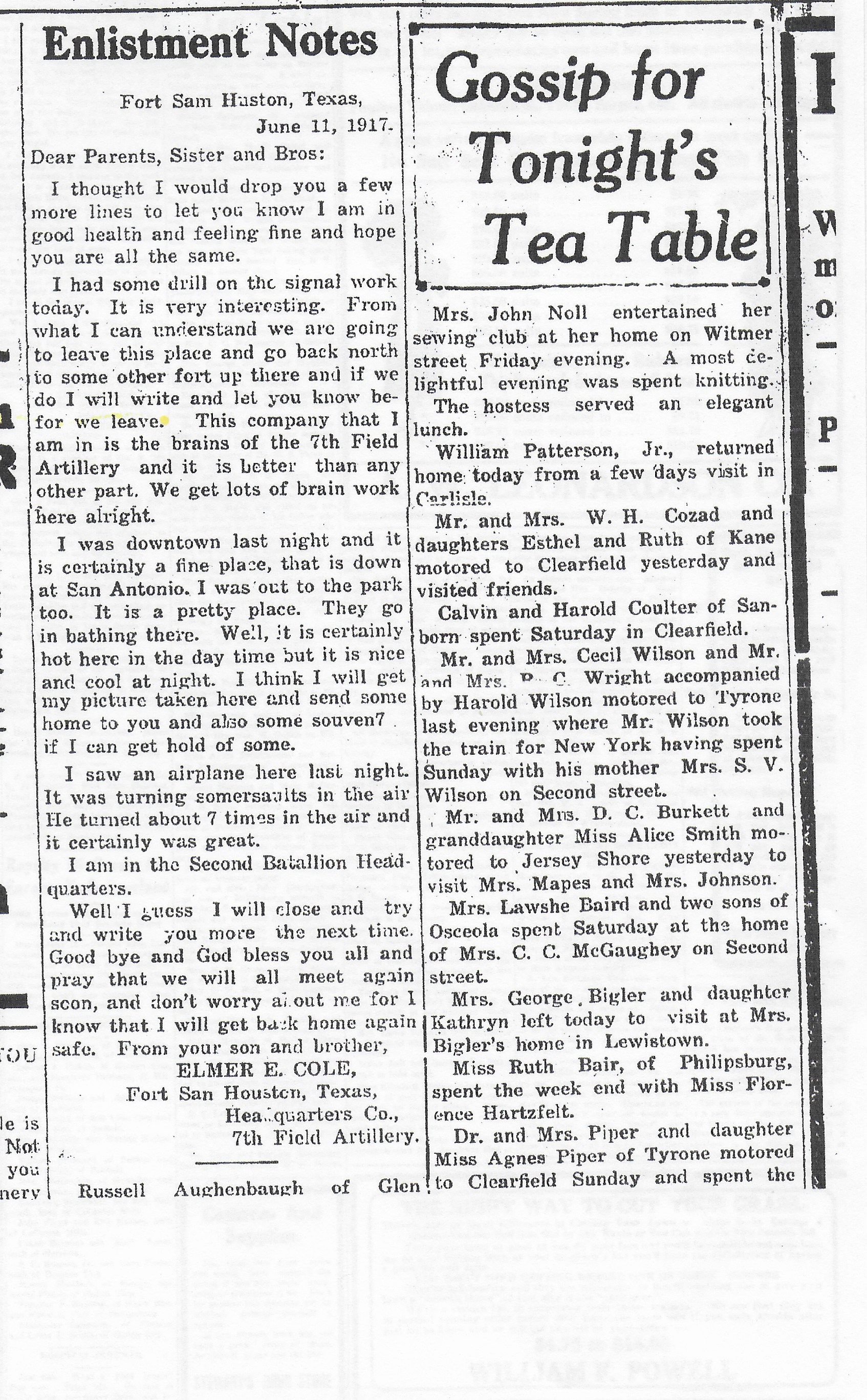
The letter Elmer wrote while he was stationed at Fort Sam Houston in Texas. It was published in the Clearfield Progress on Monday evening, June 18, 1917.
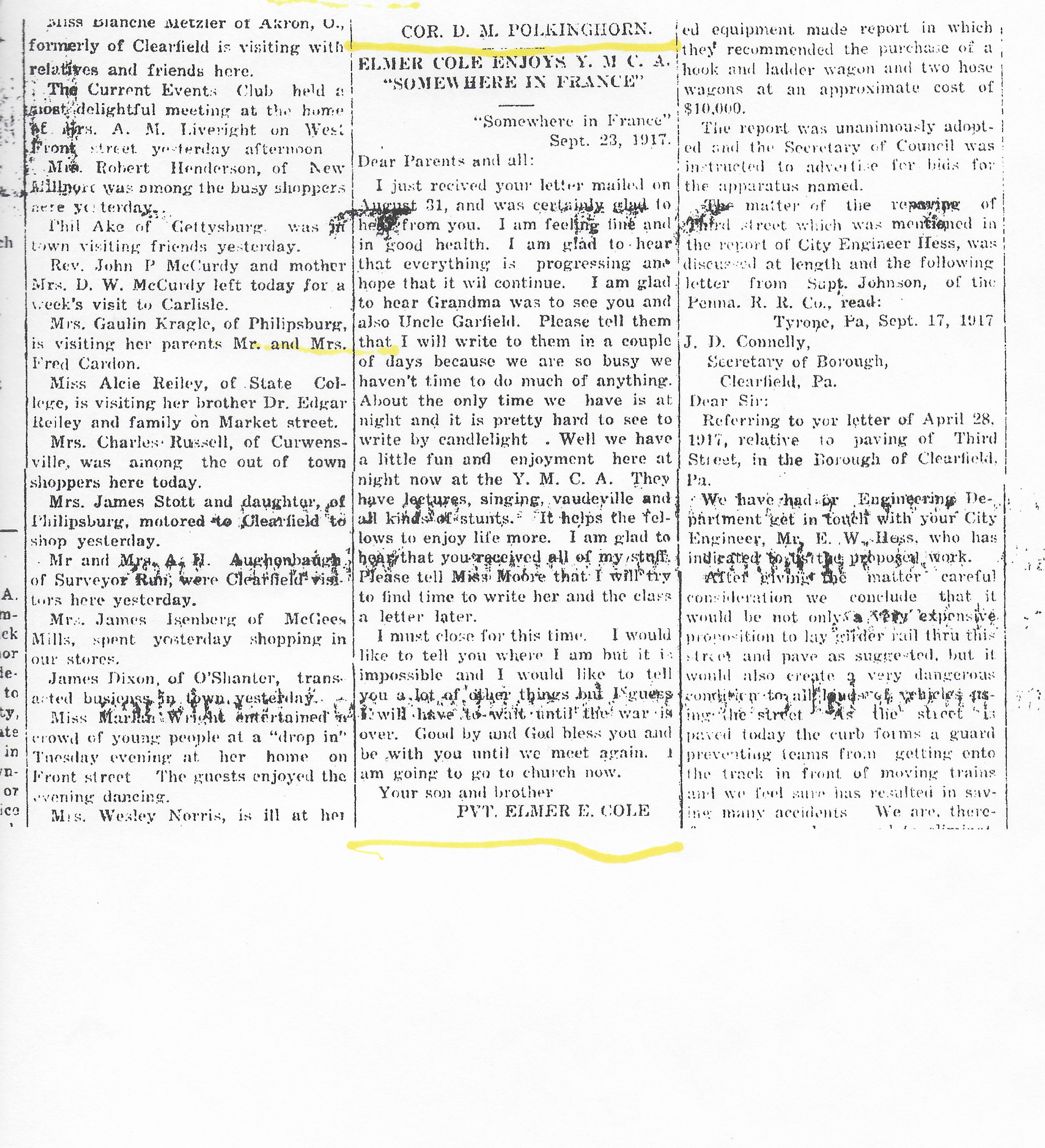
Elmer’s letter from France was published in the Clearfield Progress on Thursday evening, October 18, 1917.
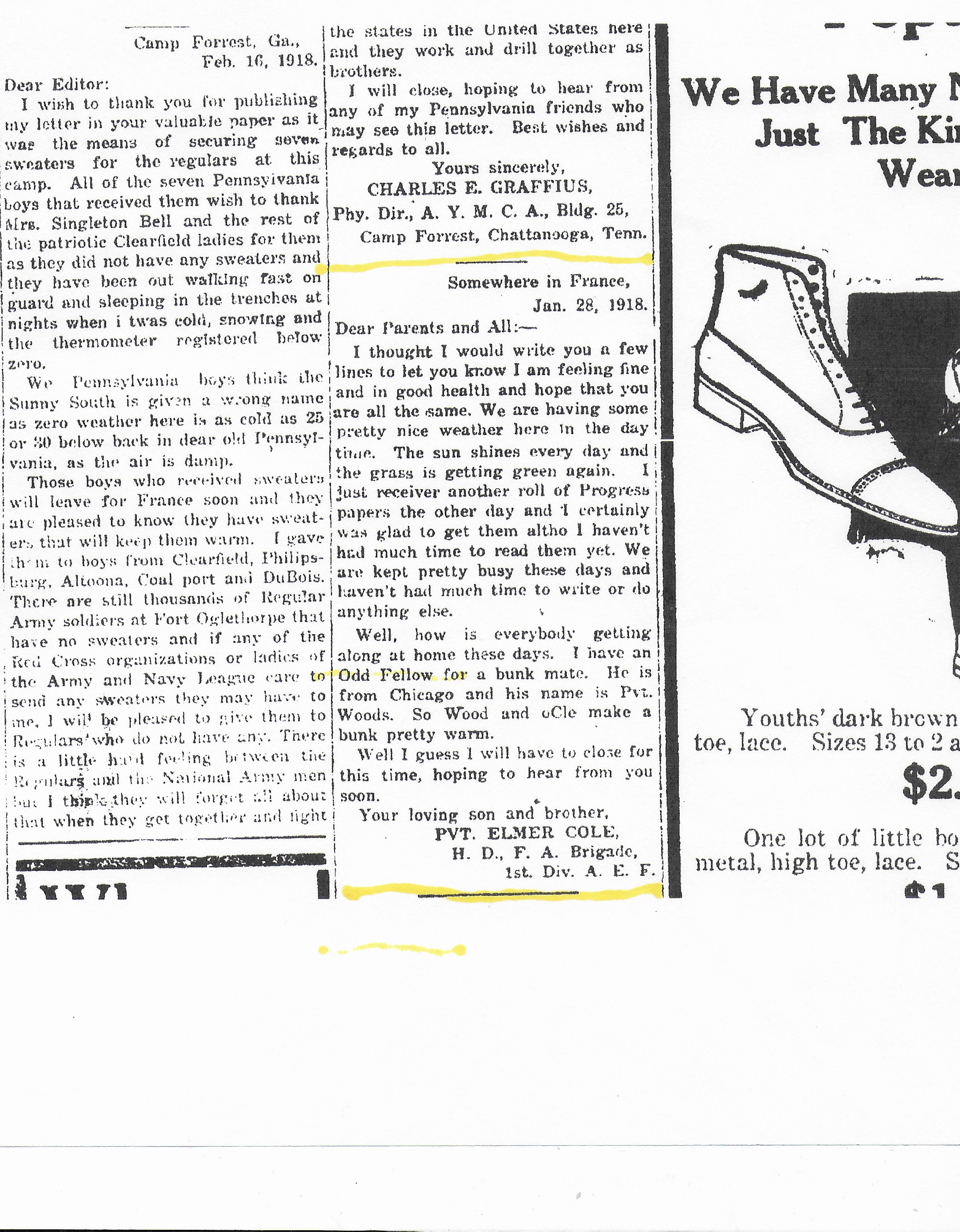
In the Clearfield Progress LETTERS FROM OUR SOLDIER BOYS
on Thursday evening, February 21, 1918, Elmer’s letter home was published.
WWl is over.

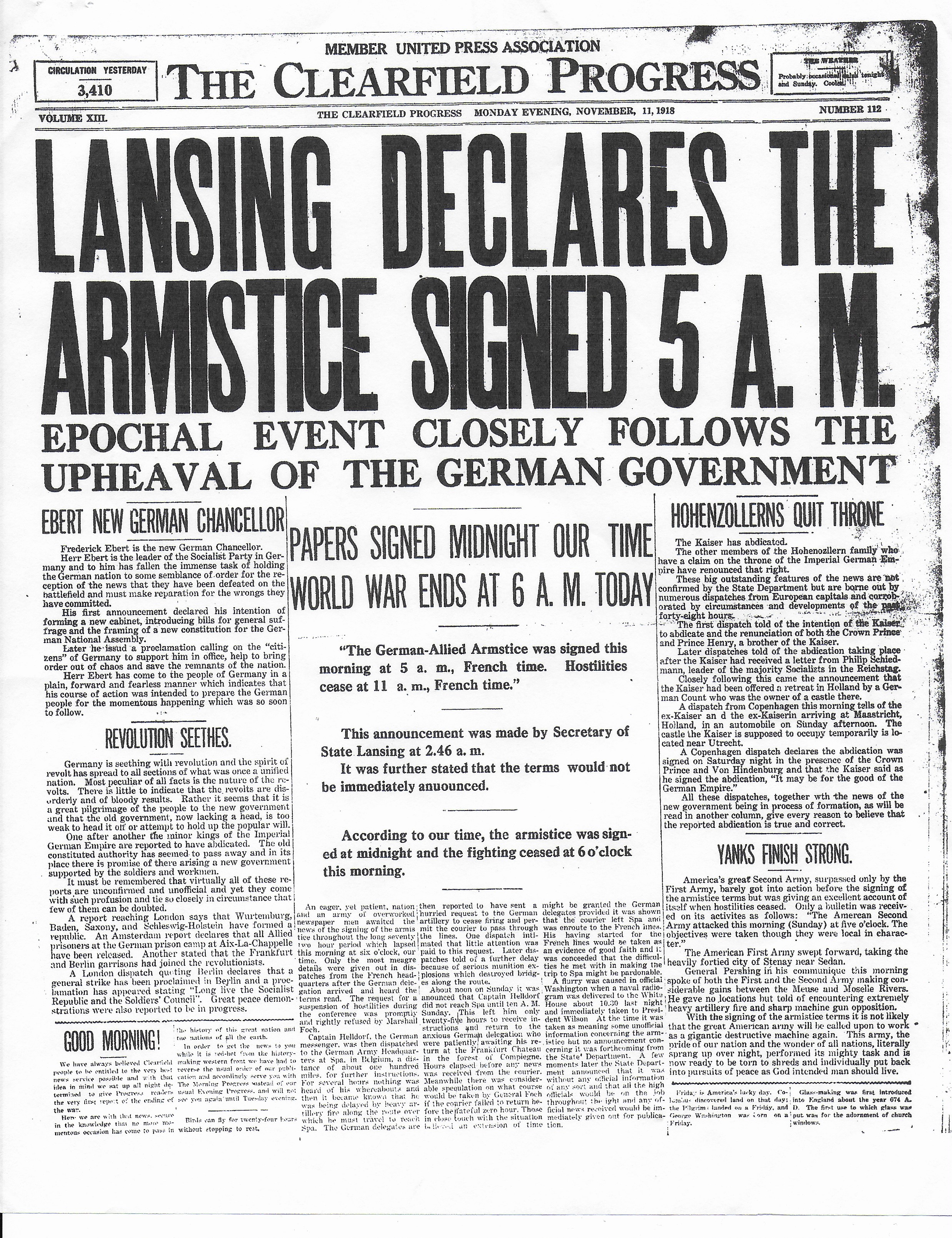
From an interview I did with my Grandmother Irene: “My brother Elmer died overseas of influenza. Mother and dad were shopping when we got the word about Elmer’s death. They had just gotten word in the papers that the Armistice was signed. My mother was all thrilled because her boys would be coming home. This message came. I answered the door. There was no one at home but me. The man that delivered it said, “Is your dad at home?” And I said, no, he’s downtown. He said, “Don’t you dare open this until your dad comes home.” Well, as soon as he was done, I opened it because it wasn’t sealed tight. So when my dad came home, I handed it to him. He read it and he said, “You know all about this, don’t you.” and I started crying. He said, “That’s all right. I’ll tell your mother.”

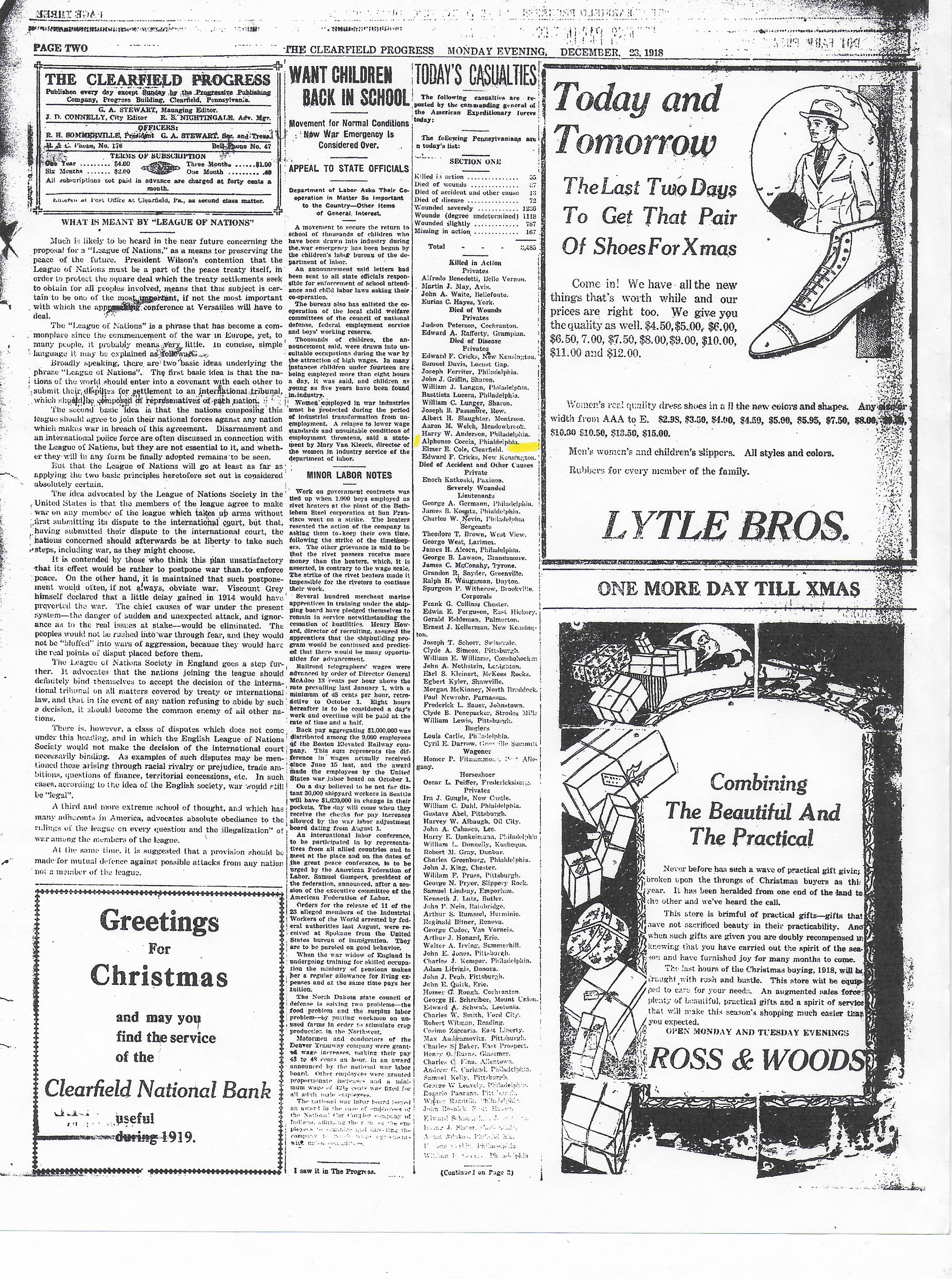
The casualty list in the Clearfield Progress that listed Elmer dying from influenza.
the army’s death notice for Elmer.

From an interview with my grandmother: “My dad only lived one year after Elmer died. My mother said he just grieved, Elmer was the oldest son. He just seemed to go downhill from then on and he died from the flu”.

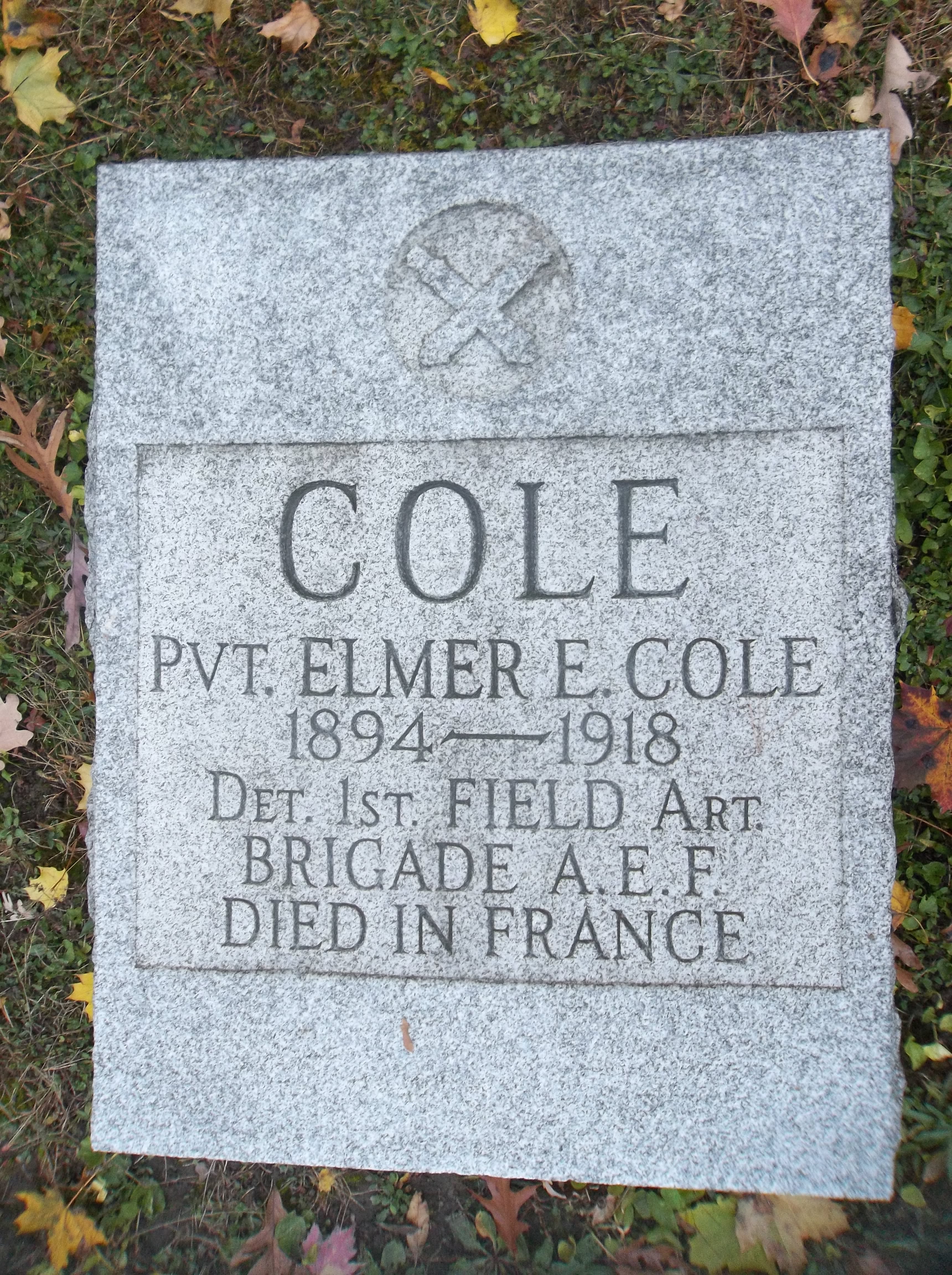
Elmer’s body wasn’t sent home from France until 1921 and he was buried in Hillcrest cemetery in Clearfield on July 1921.

Paul Cole

I set up this blog because I joined Amy Johnson Crow’s 52 ancestors in 52 weeks (#52ancestors). The challenge is to write about ancestors each week and SHARE the massive amount of material in my genealogy files. This first blog is about my great uncle Paul Cole because he was also the first one I wrote about in my genealogy writing class at the library. I have an affinity to Paul. In many ways our lives followed similar paths.

Paul was born July 10, 1877 in Clearfield County, Pennsylvania to Benjamin Franklin Cole Sr. and Harriet Giles. He was a younger brother to my great, great grandfather, Benjamin Franklin Cole Jr.
On December 1914, Paul arrived in the New Orleans port aboard the ship Marowjine. He came from Puerto Cortes, Honduras where he had been working. The vignette I wrote was as if I was there or was Paul: “The ship was docking tomorrow in New Orleans. He was sorry he didn’t have time to sightsee in the city, but Paul wanted to get to Clearfield by Christmas. Tomorrow was Monday and Friday was Christmas. It was going to be a rushed trip on the train. Paul was looking forward to seeing family over the holidays but mostly to eating dinner with brother Frank and family. He was especially anticipating the plum pudding Eliza traditionally served for Christmas dinner. He still felt the excitement he felt as a lad when the lights were turned down low and Frank carried in the plum pudding blazing from the brandy poured over the hard sauce. And he liked the taste of the pudding. Not like brother Malcolm who thought the pudding was heavy. Well, Malcolm was used to the fancy food he ate in the hotel in Chicago where he was working. He hadn’t been eating plantains and yams for the last year in Honduras. Though, before that when he was working in the canal zone, the food had been decent. Not as horrendous, according to the old timers, as it had been in the early years of the construction. By the time he had gotten to Panama, there were huge Y.M.C.A.s that had been built for the workers and each had a clubhouse where you could get iced soft drinks and ice cream. Ice cream in the jungle! That was luxury. He was wondering what kind of food they would be eating in Alaska. He wasn’t going to be home for long when he had to make the trip to Alaska for work. He carried the newspaper article with him about the government enacting the Alaska Railroad Bill into law last March. Congress appointed the engineering commission to oversee it, and the chief engineer would be Captain Frederick Mears. Not only had Captain Mears worked on the Panama canal and was now on his way to Alaska to work on the railroad, but other canal workers, including him, were on their way. And best of all, some of the same equipment used in construction of the canal was being sent to Alaska. He had heard that even the small Bucyrus steam shovels that he had run were also going to be used in Alaska. But that trip to Alaska was making him apprehensive now that it was getting closer. He was worried he couldn’t bear the frigid weather there. But it would be better than the snakes, scorpions, and tarantulas of Panama. There is always a trade off. And there was the lure of a new place, a true wilderness, a place he had never seen before. A new great adventure. Nervousness, excitement. The combination was always there for him at the beginning of a new job and a new land.” (explanation: Plum pudding is not what we think of as pudding in the U.S. It’s a British steamed fruit cake. My mother made it for Christmas when my sisters and I were young. The recipe was given to her by Grandma (Eliza) Cole, Paul’s sister-in-law.)

When Paul got to Clearfield, he was interviewed by a reporter. I was given a transcription of the article but it didn’t have the date but it seems to have been published in the early part of 1915 or name of the newspaper which I assume was the Clearfield Progress

“At Home After Four years: Paul Cole, the fifth son of Frank Cole of this place, returned from Honduras, Central America, on Tuesday of last week, where he has been running a steam shovel since leaving the Isthmus of Panama in December last. Mr. Cole went first to the Isthmus in 1910, where he engaged as a locomotive engineer and so continued until the work was completed. He spent two vacations during that period in Clearfield, and will leave in a few days for Alaska where he expects to assist in the building of a government R. R. in that country. Mr. Cole wears the Isthmian badge given him by the commission at the end of his first two years of continuous service and also has a strong testimonial signed by Geo. H. Gothals, chief engineer on the Isthmus. Thus another Clearfield boy, purely self made who was never in school after he was 12 years of age, has come to the front as among the distinguished young men of Clearfield and whose credentials show a steady promotion during the four years he was in government employ.”

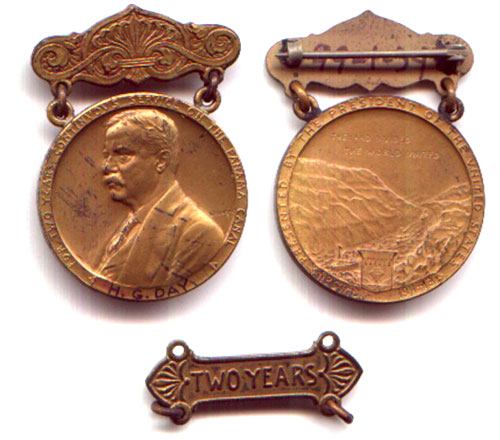
The Panama Canal Service Medal that Paul received came about when in the fall of 1906, President Theodore Roosevelt visited the Canal Zone and, in a speech at the close of his visit to Cristabel, said “I shall see if it is not possible to provide for some little memorial, some mark, some badge, which will always distinguish the man who for a certain space of time has done his work well on this Isthmus”.

On December 1906, the White House released a statement: Medals of a suitable character are to be given to all citizens of the United States who have served the government satisfactorily on the Isthmus of Panama for two years. A competent artist will be engaged and the design for a medal prepared. President Roosevelt is anxious that suitable tribute to, and recognition of service shall be shown by the government, and believes the effect will be salutary and wholesome.

The November 25, 1908 edition of the Canal newspaper “The Canal Record” had an article that the design for the medal had been completed. ( Digital copies of the Canal Record can be read on the University of Florida Digital Collections website.) It was the size of a panama silver dollar and would be struck in bronze. On the front would be a portrait of President Roosevelt. Around the border would be the inscription ‘For two years continuous service on the Panama Canal’. The other side has a view of the Culebra Cut with steamers passing through. ‘The Land Divided, The World United’ is inscribed above the horizon and around the rim is ‘Presented by the President of the United States’. Each medal was inscribed with the name of the employee and the medals were numbered consecutively, in the order in which they were earned.

In the Feb. 10, 1909 edition of “The Canal Record”, it was reported that 1000 pounds of “French scrap” (copper pipe collected from old French excavators and locomotives, bronze bearings taken from railroad cars, and tin found in an old French warehouse) was sent to the Director of the Mint at Philadelphia. The first batch of the medals were sent to the canal zone in September 1909.

This is a picture of a medal but not Paul’s. I don’t know what happened to his.

In the April 22 1914 issue of the Canal record was a list of employees who were entitled to receive a canal medal or service bar. The date shown opposite each name was that from which medal or bar is computed. Those who served continuously from 1911 to 1913 to a medal.

I don’t know if Paul made it to Alaska. The Alaska Railroad commission did publish a newspaper but the whole newspaper has not been digitized or at least is not in one place and they didn’t give out medals. Researching at the National Archives in Washington D.C. in records for the Panama Canal and the Alaska Railroad for information on Paul is on my bucket list.

In the April 13, 1917 obituary of Paul’s father in the Clearfield Republican, Paul was listed as address unknown.

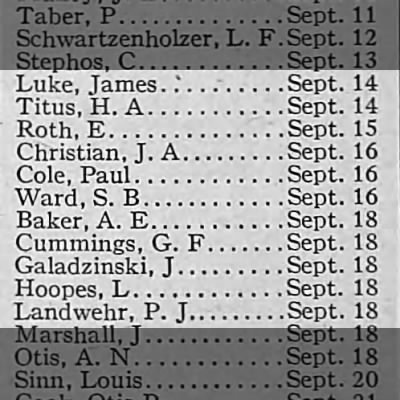
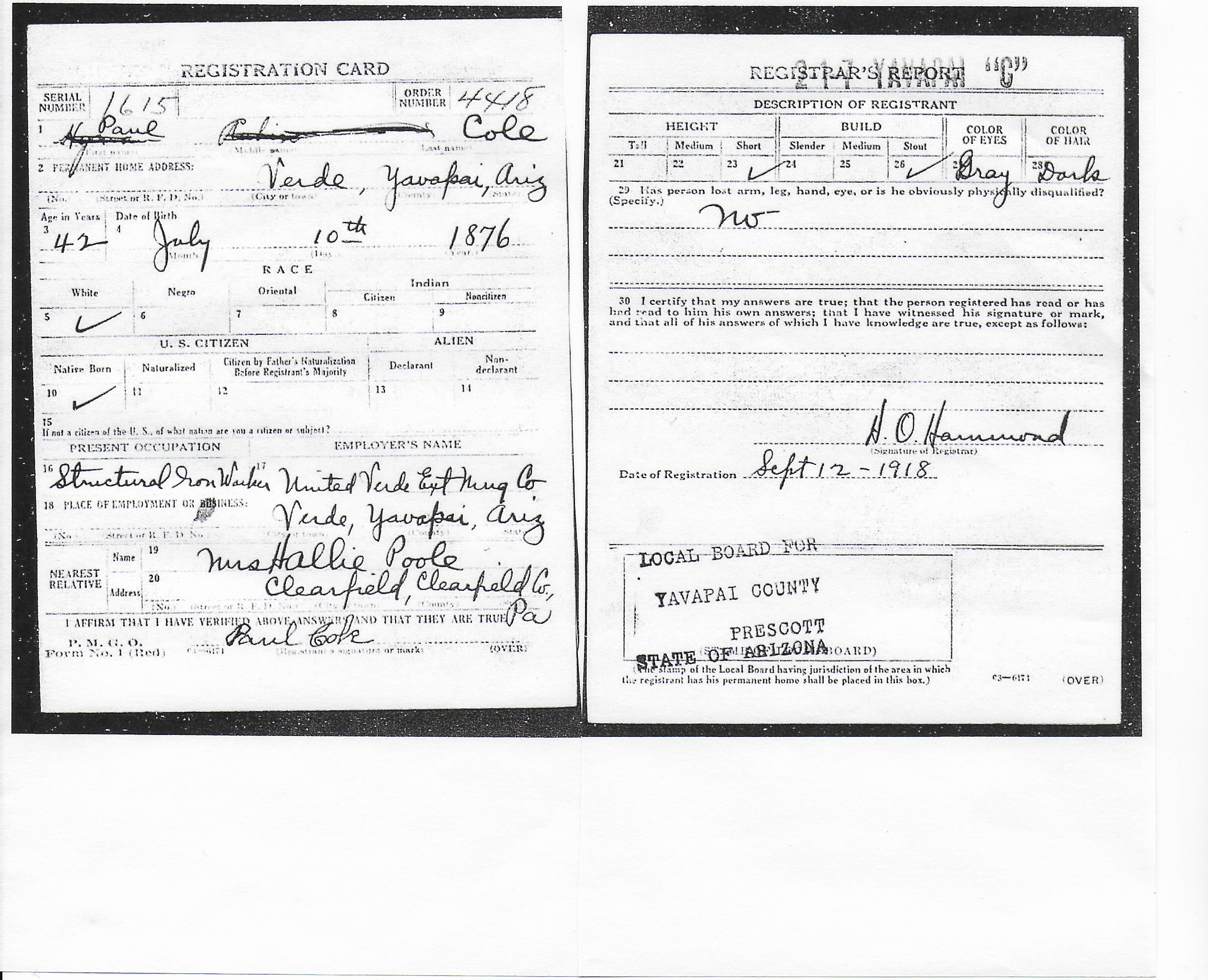
I was so thankful that genealogy sites started publishing World War l military registration cards. I found Paul’s with him living in Verde, Yavapai County, Arizona. It was signed on Sept. 12, 1918.

Paul is working as a structural iron worker in Verde. His closest relative is his sister, Mrs. Hallie Poole. He is short, stout and had grey eyes and dark hair.

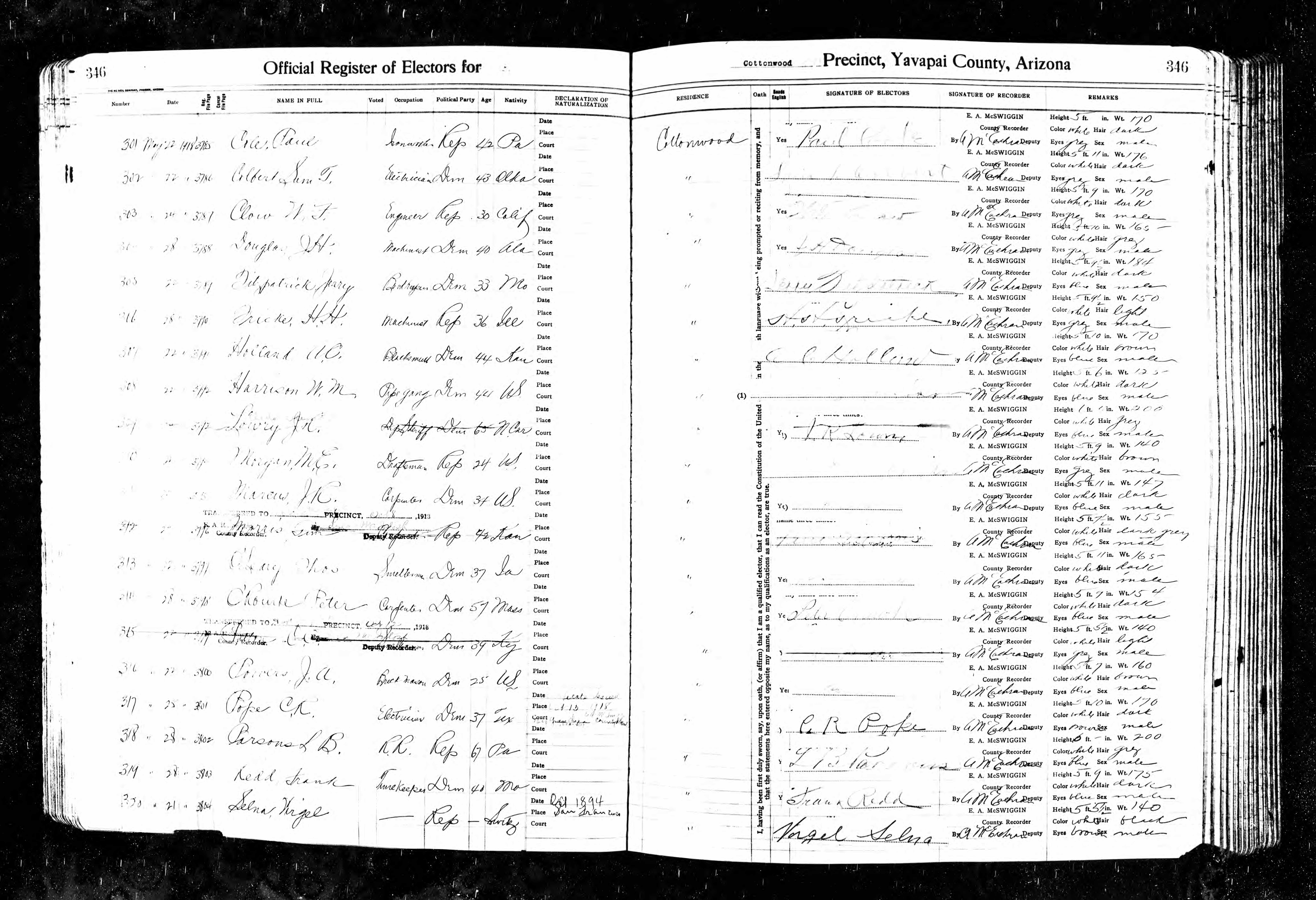
Now that I knew Paul was in Arizona, I also found that he registered to vote on May 22, 1918 with the official register of electors for Cottonwood precinct, Yavapai Co., Arizona.
I was lucky to find this register on the internet but generally you have to go to the county. I don’t know if Paul always registered to vote or this time was special. He may have wanted to specifically vote in the 1918 elections which took place in the middle of Woodrow Wilson’s second term. It was the lone election to take place during America’s involvement in World War l, and the elections were a major defeat for Wilson’s foreign policy agenda. Republicans ran against the expanded war-time government and Wilson’s proposal for the League of Nations.

#301 is Paul Cole/ occupation is iron worker/ political party is rep/ age 42/ nativity is Pa./ residence is cottonwood and in the remarks, Paul is 5 ft. tall, weighs 170, has dark hair and grey eyes.
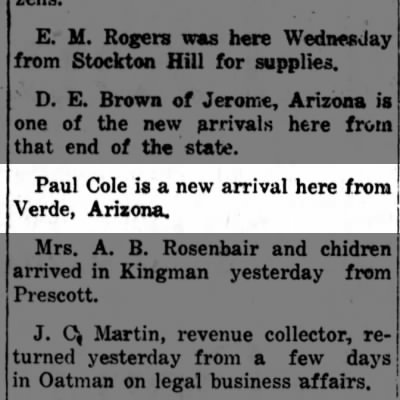
On Oct. 12, 1918 in the “Personal Items” column of the Mohave County Miner and Our Mineral Wealth newspaper in Kingman, Arizona, Paul was mentioned.

I’ve never found Paul in the 1920 census. I have no idea where he was.

In the January 21, 1927 obituary for Paul’s brother, William, Paul was listed as living in Chicago, Illinois as were his brothers, Clarence and Malcolm.

Again in the February 14, 1928 obituary of his brother, Charles, Paul and Malcolm are still in Chicago.

Then, Paul disappears again until I find a mention in the Gossip for Tonights Tea Table in the May 19, 1931 issue of the Clearfield Progress: “Paul Cole, who came up from his home in Lake Park, Georgia, Friday to visit his sister, Mrs. Isaac Poole, Jr., returned home Sunday.

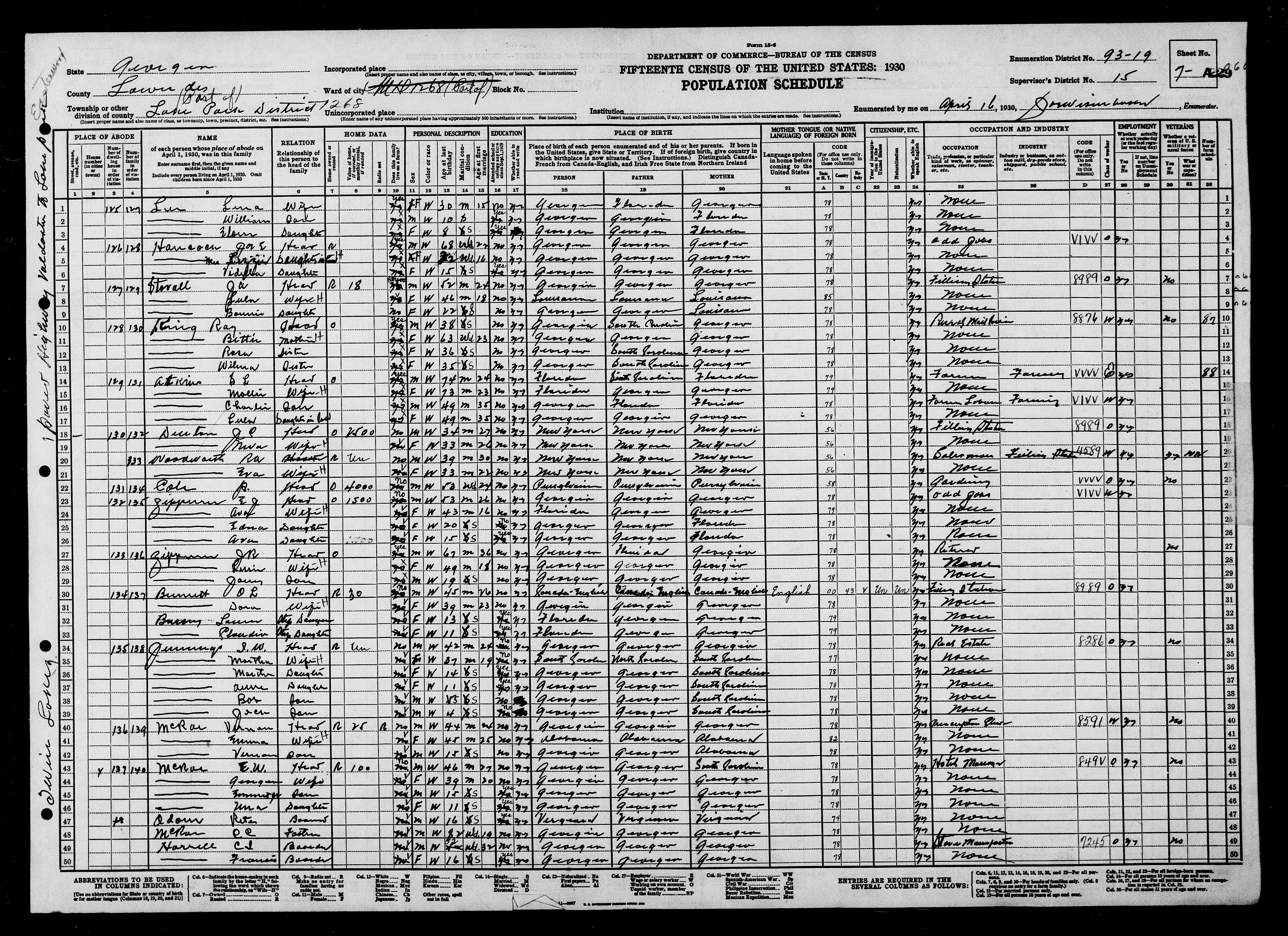
Once I have a state I find Paul in the 1930 census in Georgia, Lowndes Co., Lake park town, district 19.

1930 census for Georgia, County of Lowndes, Lake Park town, district 19. Paul owns his house which has a value of 4000

Imagine my surprise when I see that he is a widower and was married at age 24 and his occupation is gardener. Up to this point I had never seen a mention of a wife. So I go back to the 1900 census for McKees Rocks borough, Allegheny Co., Pa. Paul is a boarder, 24 years old, single, and works as a sawyer in a box factory.

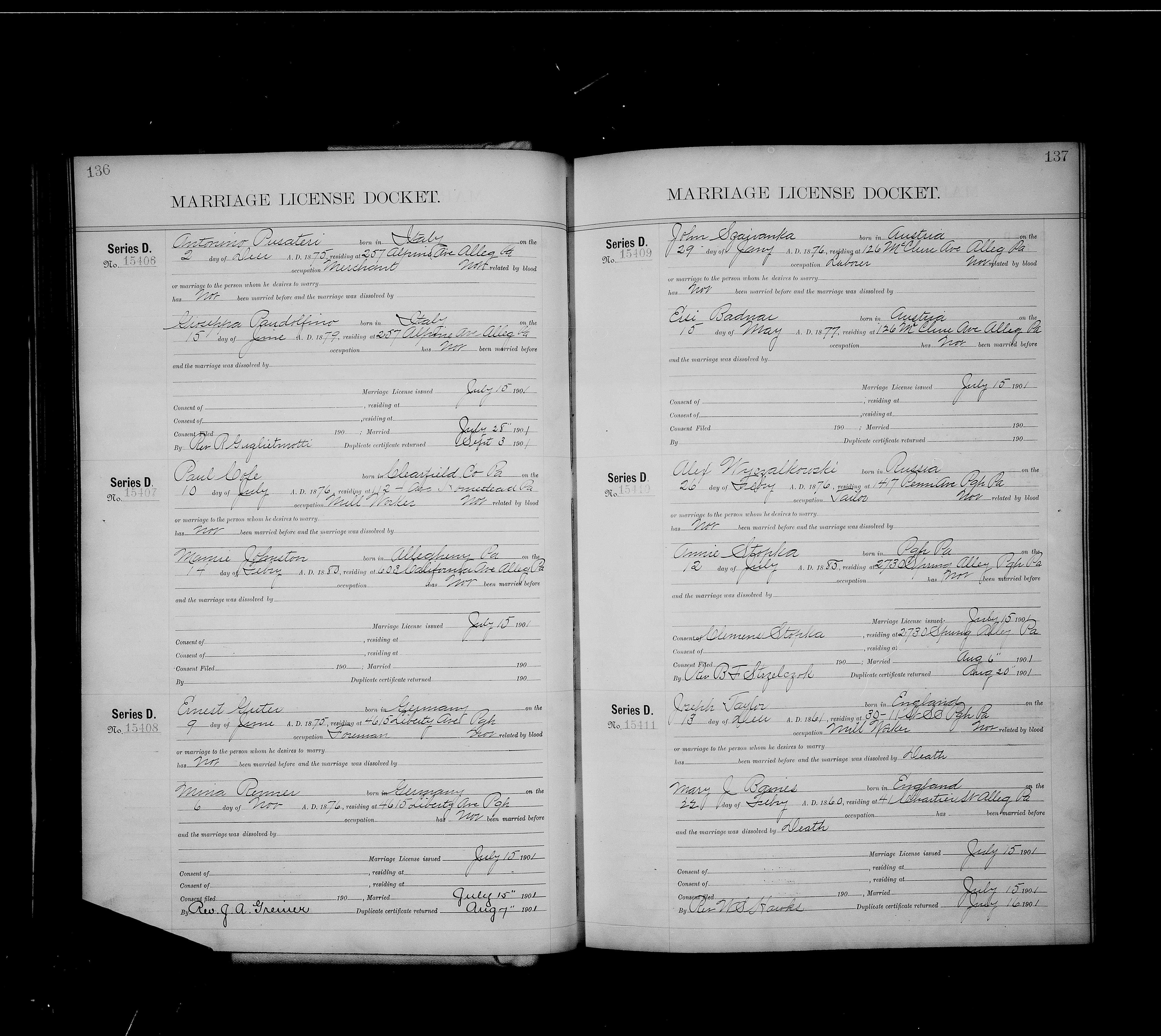
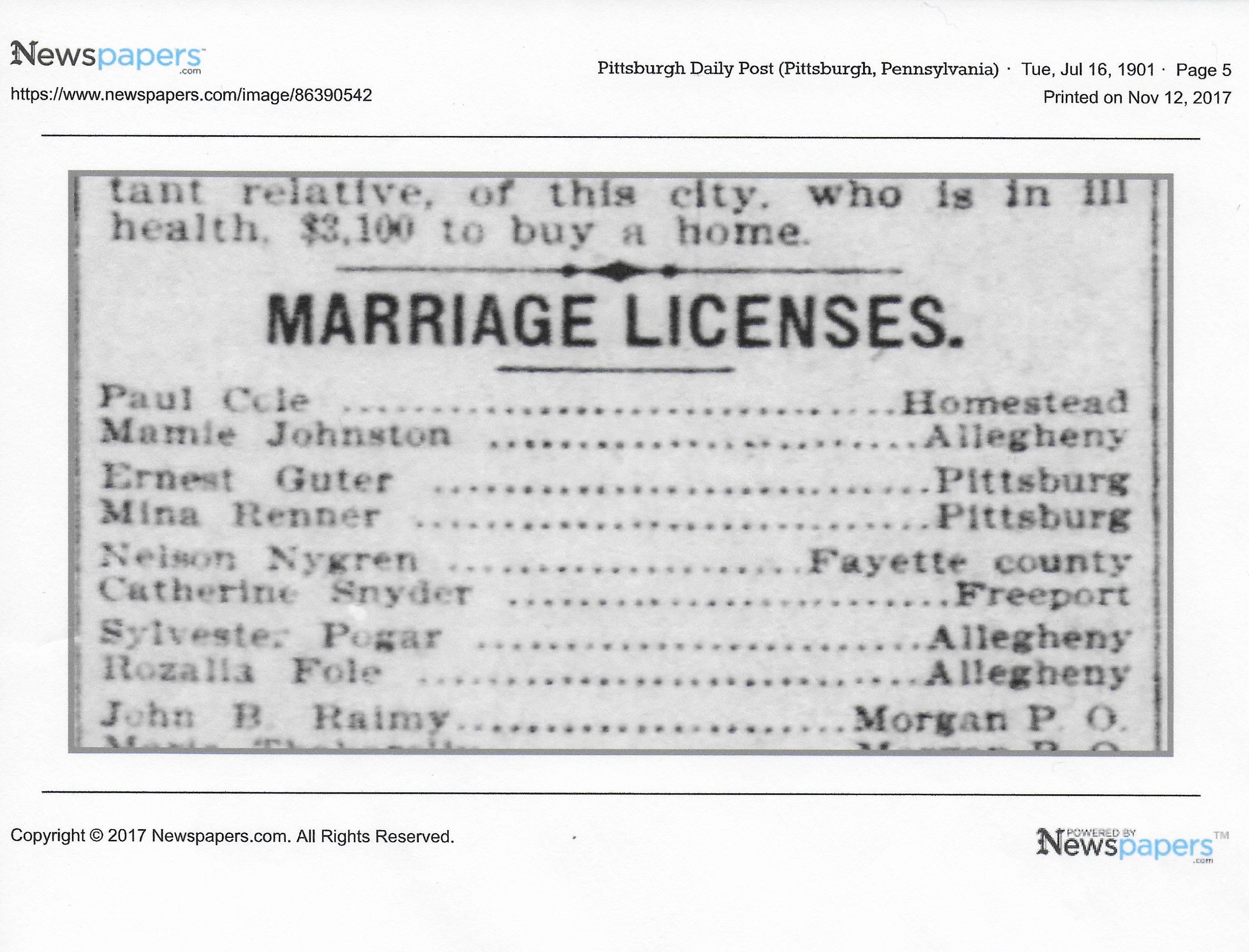
But I do find a marriage license for Paul and Mamie Johnston.

1901, July 15, Paul Cole and Mamie Johnston Marriage license issued in Allegheny Co. Paul was born in Clearfield county, Pa. on the 10th day of July 1876 and is residing at 112 4 ave., Homestead, Pa. occupation is mill worker and he has not been married before. Mamie Johnston was born in Allegheny co., Pa. on the 14th of Feb. 1880 residing at 603 Califonia ave, Allegheny, Pa. and has not been married before.


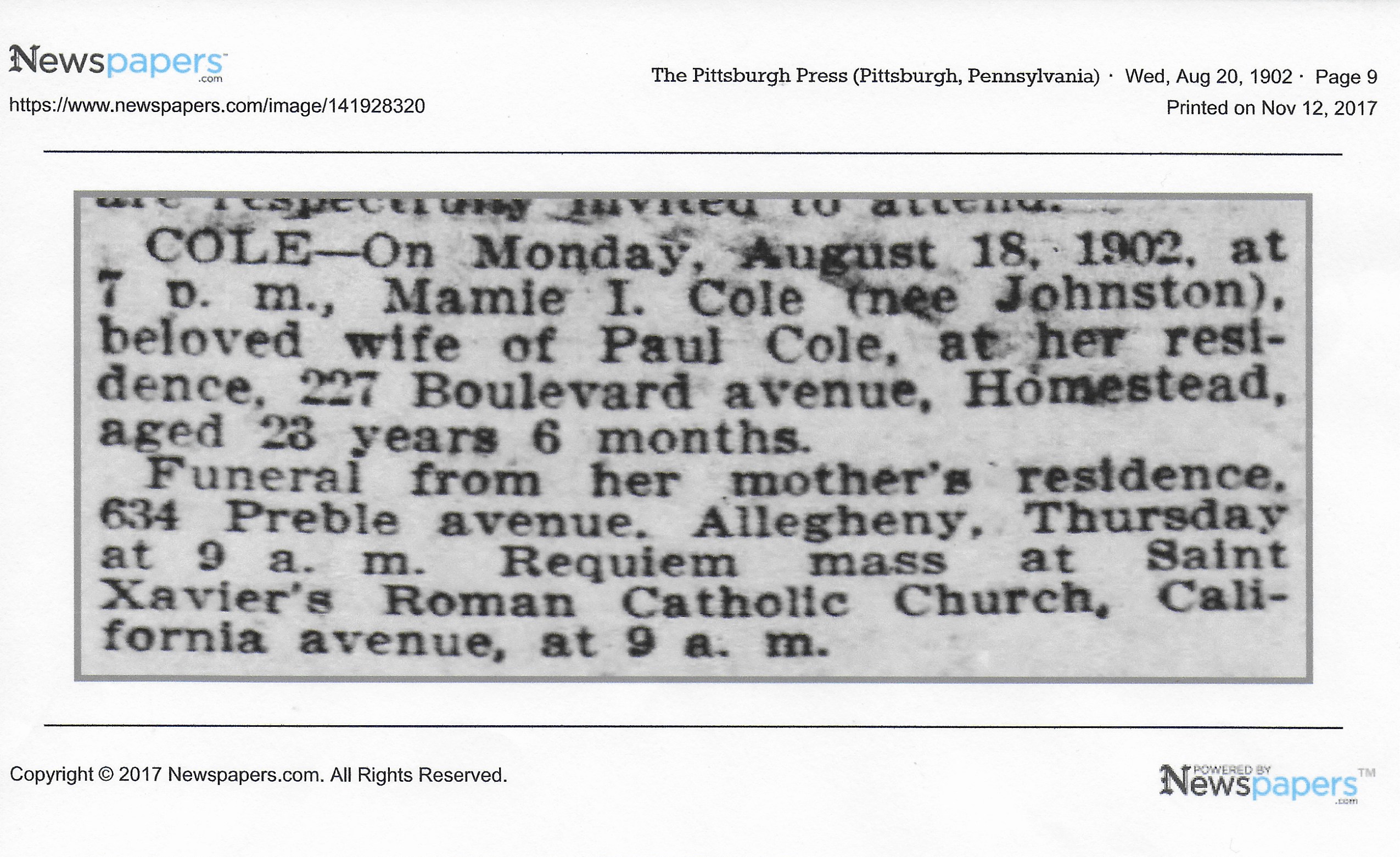
Mamie is residing at 603 California on the marriage registration. I go back to the 1900 census for Allegheny Co., and Paul’s brother Guy is also living at 603 California av. in a boarding house run by Mary Johnston with her daughter, Emma, Mary (Mamie), and Maude. Probably how they met. But then tragedy struck:

Mamie died just a year and a month after she and Paul got married.
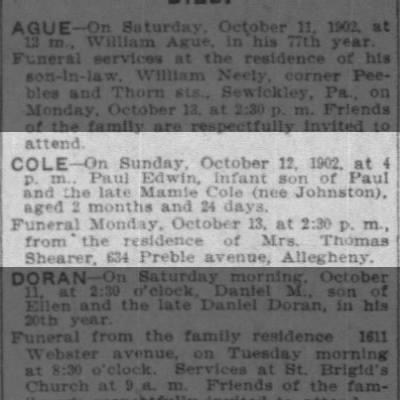
And sadly, their son died a month and a half later than his mother.

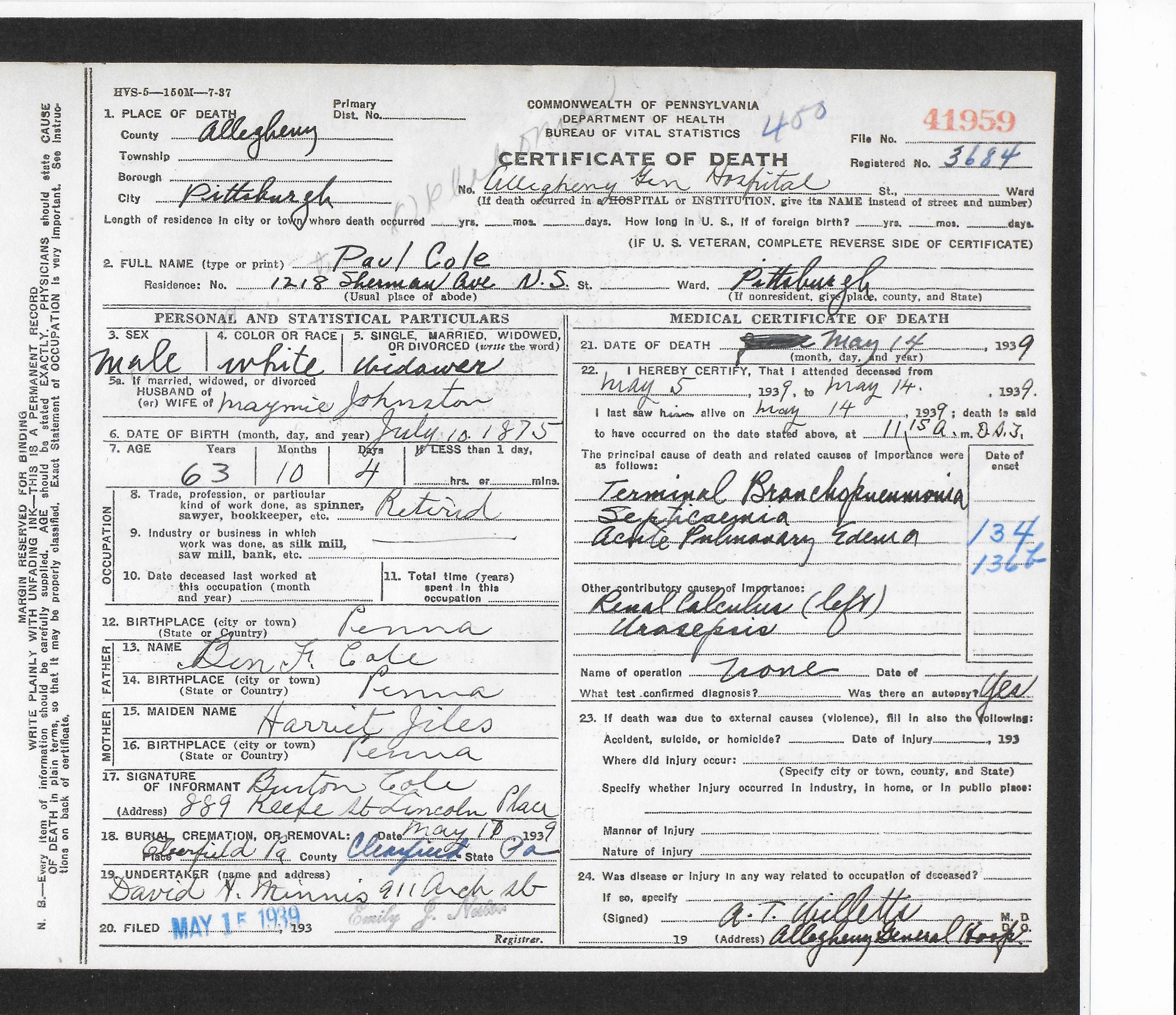
After 8 years of living in different boarding houses, Paul goes to work on the Panama canal. And I return to Paul in Georgia. Around 1935, he sells his house and moves to Pittsburgh where is brother Bert is living and he dies there on May 14 1939 in the Allegheny General Hospital.

Paul died of terminal bronchopneumonia, septicemia, acute pulmonary edema and other contributory causes were real calculus (left) and urosepsis

May 15 1939 Paul’s obituary is in the Clearfield Progress: Paul Cole, formerly of Clearfield, died from a short illness in the Allegheny General Hospital, Pittsburgh, Sunday May 14 at 11:20 am. Born July 1, 1887, he spent his early years of life in Clearfield. For several years he served as an iron worker on various construction project in South and Central America. He made Pittsburgh his home the last four years. He is survived by the following brothers and sisters, his wife having passed away several years ago, Mrs. Isaac Poole, Mrs. L. E. Rowles, both of Clearfield, Bert of Pittsburgh, Clarence of Hammond, Ind., Malcolm of Chicago, Ill. He was brought by train from Pittsburgh on Tuesday, may 16, to the home of his sister Mrs. Isaac Poole of 501 West Front Street. Funeral Services will be conducted at the Poole home by the Rev. R. A. Zimmerman on Tuesday at 4:00 PM. Internment will be at Clearfield Cemetery.